The Strike
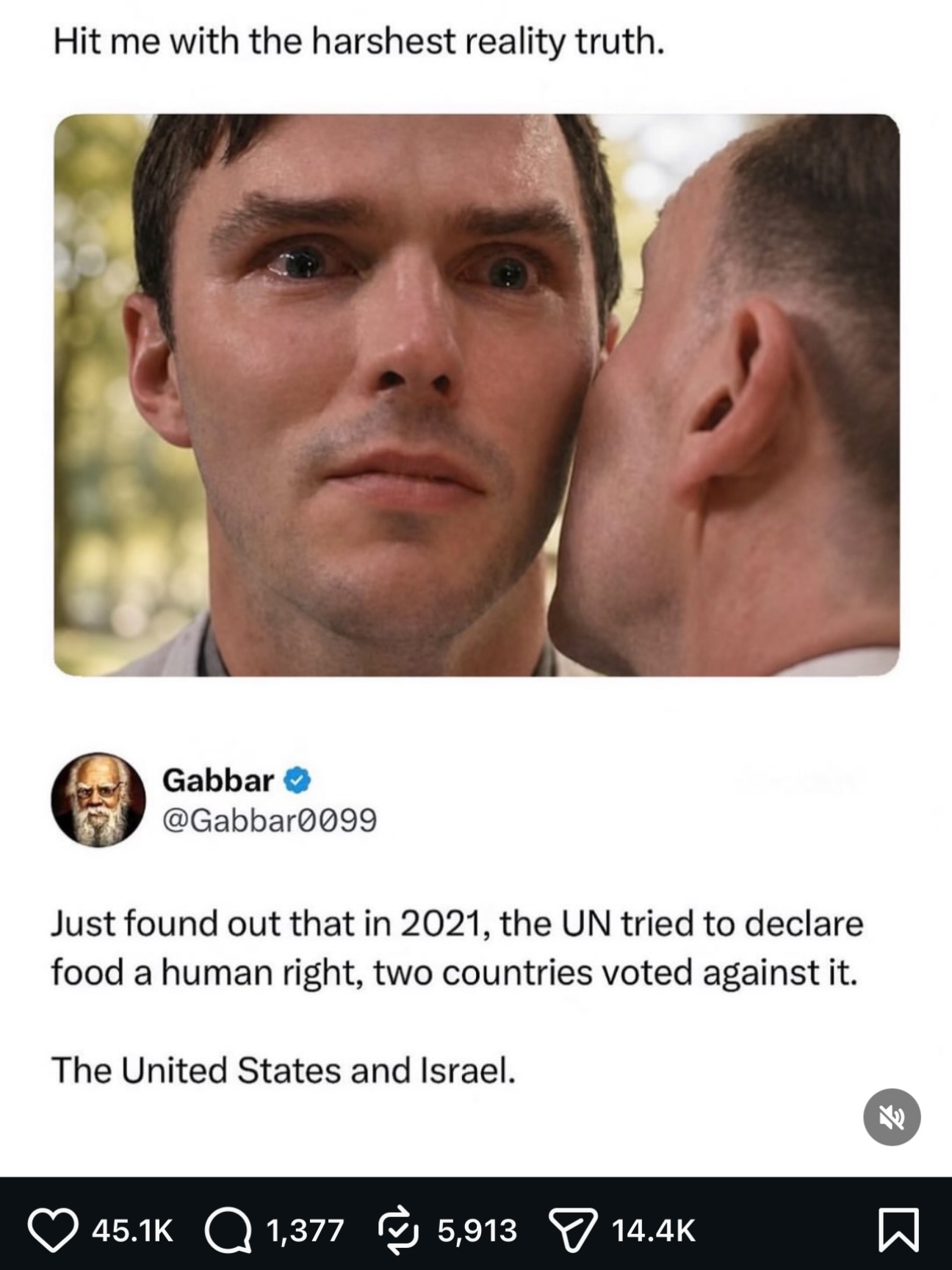
It started with a single, searing question. A Threads user known only as @mrearthrebirth posted a seemingly innocent debate: “Remember that time we debated food being a necessity.” Within hours, the post went viral—30,500 likes, 423 replies, 2,400 reposts. But behind the meme, a covert operation was already in motion. The protagonist: a whistleblower inside the United Nations. The antagonist: a shadowy coalition of member states and corporate interests. And the strike? A meticulously timed leak of encrypted documents that would expose a multi-billion-dollar scheme to commodify hunger.
The whistleblower, a senior analyst with access to sealed UN files, had watched for years as debates over food security were quietly hijacked. In 2021, the UN Third Committee approved draft resolution L.47, reaffirming hunger as a priority. But according to leaked internal memos, the resolution was a smokescreen. Behind closed doors, a powerful bloc was pushing to redefine food as a tradable commodity—not a human right. The whistleblower’s strike: releasing those memos to a select group of journalists and activists, triggering a firestorm that would soon engulf the globe.
The Threat
The leaked documents revealed a breathtaking scheme. A consortium of agribusiness giants and sympathetic governments had been secretly drafting a parallel agreement—one that would allow them to speculate on food futures during crises, driving prices sky-high while millions starved. Internal emails described famine as a “market opportunity.” Private diaries of a key negotiator detailed meetings where hunger was referred to as “leverage.”

The threat was existential. If enacted, the agreement would strip governments of their ability to regulate food supplies during emergencies. It would hand unprecedented power to a handful of corporations, allowing them to profit from conflict-induced hunger. The whistleblower’s evidence showed that the consortium had already spent millions lobbying key UN ambassadors, drafting secret protocols, and even intercepting communications from humanitarian agencies that opposed the plan.
“We’re not talking about policy. We’re talking about pure suffering. And they were betting on it.” — Leaked internal memo
As the documents circulated, the antagonist’s allies scrambled to contain the damage. But it was too late. The story was out. And the world was watching.
The Trump Card
Just when the consortium thought they could ride out the storm, the protagonist played the trump card. A second cache of documents—unsealed by a whistleblower-friendly judge—revealed the personal involvement of a high-ranking official. Emails showed the official personally approving a deal that would have diverted food aid to a private storage facility, where it would be held until prices peaked. The evidence was undeniable. The official resigned within hours.

The consortium’s scheme crumbled. The UN announced an emergency review of all food-related resolutions. The whistleblower, still anonymous, released a final statement: “Food is not a bargaining chip. It’s a lifeline.” The viral Threads post, now a symbol of the resistance, was shared millions of times. But the battle isn’t over. The forces that tried to commodify hunger are still out there, waiting for their next move.

So ask yourself: when the next debate over food arises, will you see it as a necessity—or will you recognize the shadow of those who would turn it into a weapon? The answer might determine the fate of millions.