The Blackout That Was Supposed to End the War
It started with a silent kill switch. No warning. No explanation.
On October 19, Ukrainian commanders watched their screens freeze. Starlink and Starshield—the satellite lifelines that guided drones and missiles—simply stopped working at speeds of 130 to 161 km/h. Logistics froze. Drones fell from the sky. The front line went dark.
Within 48 hours, the order was traced to the top. Elon Musk had personally slowed the military-grade Starlink for Ukraine, according to The Wall Street Journal. Some strike drones became practically useless. Interceptor drones went blind.
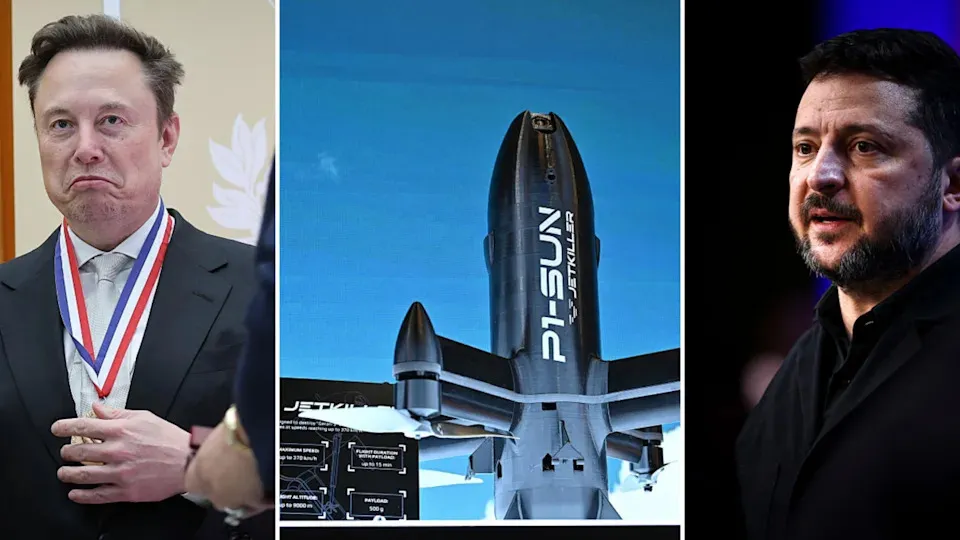
Then came the kicker. On October 22, reports surfaced that President Trump had called Musk directly, asking him to lift the restrictions. The implication was clear: the White House could turn the signal back on. Or not.
Russia’s jamming playbook had just found its biggest target. And Kyiv had just lost its biggest dependency.
The Threat: A Multi-Million-Dollar Chokehold
Moscow didn’t need to fire a shot. The West was doing the work for them.
Every long-range strike Ukraine launched relied on a single commercial satellite network—controlled by a billionaire with his own geopolitical whims. Every drone, every missile, every mission hung on a signal that could be throttled by a tweet or a phone call.
Russia’s electronic warfare units had spent years trying to jam Starlink. They failed. But they didn’t need to succeed. The real vulnerability was never the signal itself. It was the dependency.
“We found a way to technologically overcome this challenge, but this only covers probably 15 to 20% of what we could do if the Starlink was working over Russia.” — Iryna Terekh, CEO of Fire Point
That 15 to 20% was a start. But it wasn’t a solution. It was a bandage on a bullet wound.

Behind the scenes, Fire Point engineers were racing against time. They weren’t just building a backup. They were building an exit strategy.
The Trump Card: A Missile That Doesn’t Need Permission
On October 30, the silence broke.
Fire Point CEO Iryna Terekh told Reuters the unthinkable: her company had built long-range strike systems that finish the mission without any satellite link. No Starlink. No external signal. No permission.
“Fire Point systems are designed to finish a mission without a satellite link,” Terekh said. “Navigation that works without any external signal is a priority.”
The details are classified. But the implications are seismic.
Russia’s entire jamming strategy—billions spent on electronic warfare—was built to kill signals. Now the signal was gone. And the missile still flew.

And it’s not just a workaround. Fire Point’s FP-7 tactical ballistic missile—range roughly 300 kilometers—just made its combat debut. It can target Russian Iskander launchers before they relocate. It can hit high-value targets that drones can’t reach. It can do it all without a single American satellite.
Terekh admitted the new tech only covers 15 to 20% of what full Starlink coverage would allow. But that 15 to 20% is a foothold. And footholds become breakthroughs.
“We have built with this in mind. Fire Point systems are designed to finish a mission without a satellite link.”
The message to Moscow is clear: you can jam the sky. You can pressure the West. You can cut the signal. But you cannot cut the will.
Ukraine just proved it can fight blind—and still hit the target.

But the question remains: if Ukraine no longer needs Starlink, what happens to the leverage the West once held? And what does it mean when a country learns to fight without asking for permission?
When the lifeline is cut, do you beg for it back—or build your own?