The Strike
It was a bloodbath. In a single trading session, Alphabet—Google’s parent company—shed nearly $500 billion in market value. The stock plummeted 12.29%, the worst one-day drop in its history. The trigger? Google’s own AI.

On the Q3 earnings call, executives admitted the unthinkable: AI Mode, the company’s flagship AI search product, was cannibalizing its most profitable business—traditional search ads. Revenue growth decelerated. Investors panicked. The entire tech sector convulsed.
“Google is happy AI is cannibalizing its most profitable business,” one analyst noted dryly. But the market wasn’t laughing.
The damage didn’t stop at Google. The Nasdaq suffered its worst day since June. Chipmakers were routed: Nvidia fell 4.22%, AMD plunged 10.88%, Qualcomm lost 11.12%. The Philadelphia Semiconductor Index sank 7.2%. The AI bubble had officially burst.
The Threat
But this was no accident. Behind the scenes, Google had been quietly building a machine that would devour its own cash cow. For years, the company poured billions into AI research, culminating in Gemini 4 Carbon—the most powerful AI model on the planet. It was a triumph of engineering. And a strategic nightmare.

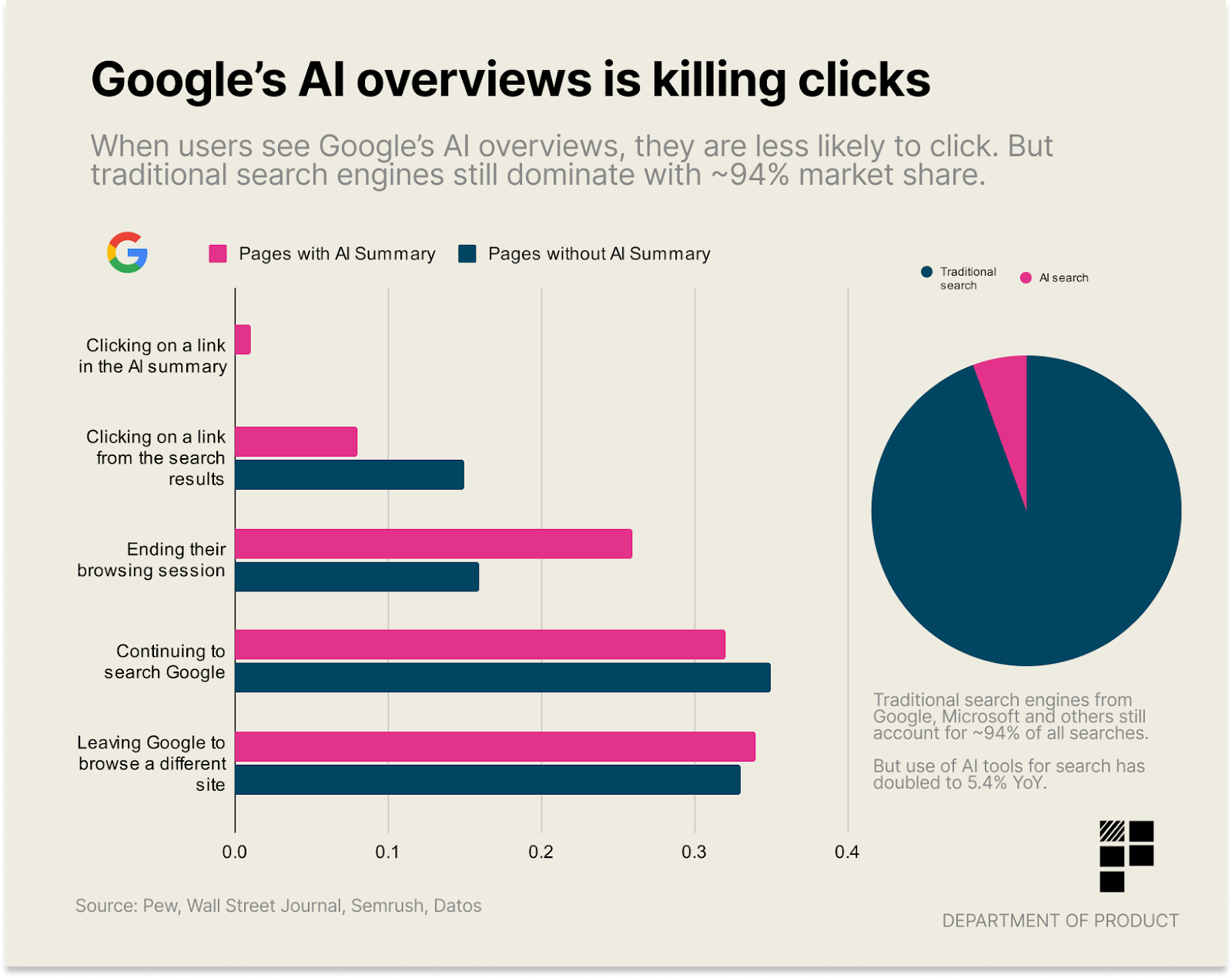
Internal documents leaked to select journalists revealed a chilling projection: within two years, AI-generated answers would reduce click-through rates on traditional search ads by up to 40%. The company knew. And they did it anyway.
Why? Because the alternative was worse. Competitors like OpenAI and Perplexity were already siphoning 5.6% of US search traffic. If Google didn’t cannibalize itself, someone else would. So they made a deal with the devil—their own creation.
“We’re like a startup again,” CEO Sundar Pichai said, trying to spin the disaster. “Usage trumps revenue.”
But the market saw through the smoke. The $200 billion in capital expenditures—and a reported $1 trillion+ AI bill—had produced negative cash flow. Google was bleeding money to train models that were killing its golden goose.
The Trump Card
Just when it seemed Google was on the ropes, a twist. In the chaos of the selloff, a quiet filing with the SEC revealed something extraordinary: Google’s cloud division had more than doubled revenue to $30.7 billion, a 103% year-over-year surge. Enterprise AI was booming. And Google owned the infrastructure.

While the market panicked over search ads, the real money was shifting to AI services. Google’s Gemini 4 Carbon was already the top-ranked model on the Artificial Analysis Intelligence Index. And the massive capex? It was building the data centers that would power the next decade of AI—for everyone.
In other words, Google wasn’t dying. It was transforming. The cannibalization was deliberate—a calculated sacrifice of the old to feed the new. And the trump card? A $3 trillion valuation and a cash pile deep enough to weather any storm.
“If AI investments don’t pay off, the impact would be wide-ranging,” one analyst warned. But Google is betting they will.
As the tech industry reels, one question remains: In the race to own the future, how much of the present are we willing to burn? And when the music stops, who will be left standing?