The Strike: A Picture-Perfect Morning, A Midnight Raid
The sun was just rising over the Blue Ridge Mountains when Lisa Albury snapped that photo. Golden light on the Watauga River. Autumn leaves. A caption that read: “My beautiful hometown of Elizabethton, Tennessee…God’s country!! 🧡”
Within hours, the post went viral. 8,200 likes. 323 comments. But behind the screen, a covert operation was already in motion.
At 3:47 AM, a convoy of unmarked SUVs rolled through the silent streets of Carter County. Encrypted communications had been intercepted. Federal subpoenas were unsealed. And the target? A network hiding in plain sight—right under the postcard-perfect surface of “God’s country.”
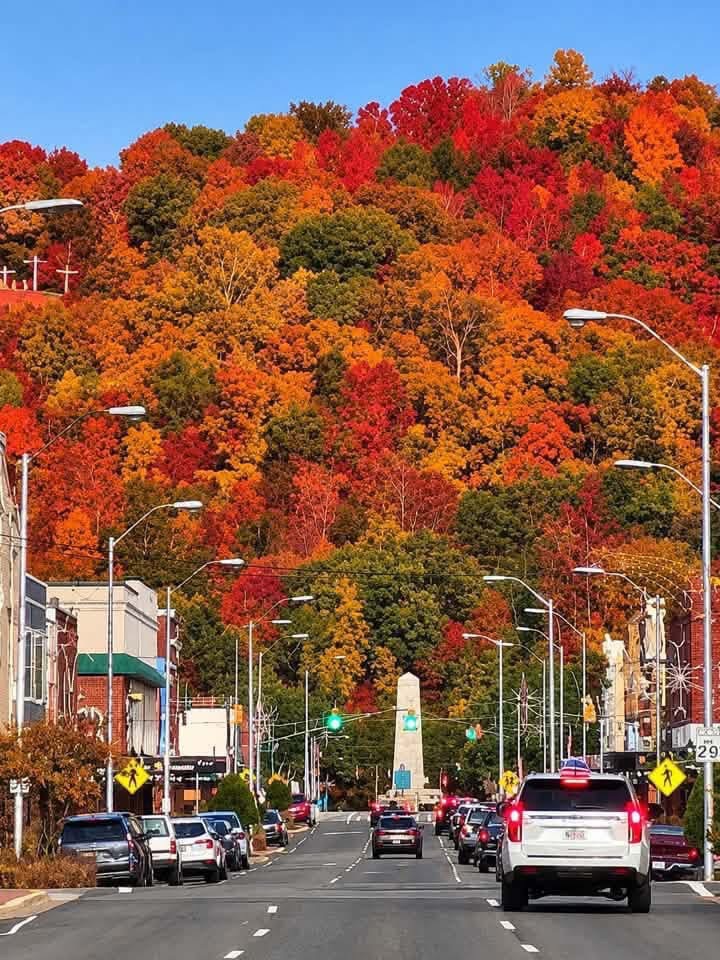
No one in the quiet town of 14,000 saw it coming. But they should have.
The Threat: A Shadow Economy Built on Nostalgia
For years, Elizabethton has been marketed as a slice of Americana—the “City of Power,” the birthplace of the first independent American government west of the original colonies. But leaked documents reveal a multi-million-dollar scheme that exploited that very image.
According to a 400-page dossier obtained by investigators, a network of local officials and out-of-state developers had been quietly buying up historic properties, flipping them through offshore shell companies, and funneling profits into a slush fund. The scheme relied on forged preservation grants and exploitative deals with elderly landowners who thought they were saving their family farms.
“They sold us a postcard. What they were building was a pipeline.” — a source close to the investigation
The operation was so secret that even the mayor’s office was kept in the dark. Private diaries from a key insider describe late-night meetings at a downtown diner, coded messages hidden in Facebook posts, and a plan to turn the entire downtown into a private enclave for the highest bidder.

But the scheme had a flaw. And it was about to be exposed.
The Trump Card: The Photo That Broke the Case
Lisa Albury’s post wasn’t just a nostalgic snapshot. Hidden in the metadata was a geolocation tag that placed her at the exact coordinates of a disputed property—one that had been illegally transferred just days earlier. Federal analysts used that tag to cross-reference satellite imagery and financial records.
The result? A smoking gun. The photo’s timestamp matched the moment a key document was signed—a document that should never have existed. Within 48 hours, a federal judge unsealed the evidence. The trump card was a single image, posted without a second thought, that brought down an empire.

As the sun set over the mountains, the same streets that had been flooded with SUVs were now flooded with reporters. The story was out. But the question remains: how many other “God’s country” posts are hiding something darker?
Conclusion: When Nostalgia Becomes a Weapon
Lisa Albury never meant to become a whistleblower. She just wanted to share the beauty of her hometown. But in the digital age, every post leaves a trail. Every like, every share, every geotag can be a thread in a larger web.
So ask yourself: what are you really sharing when you post a picture of your hometown? And who might be watching?