The Strike: Cooper’s Silent Coup
It was swift. It was surgical. And it caught them off guard.
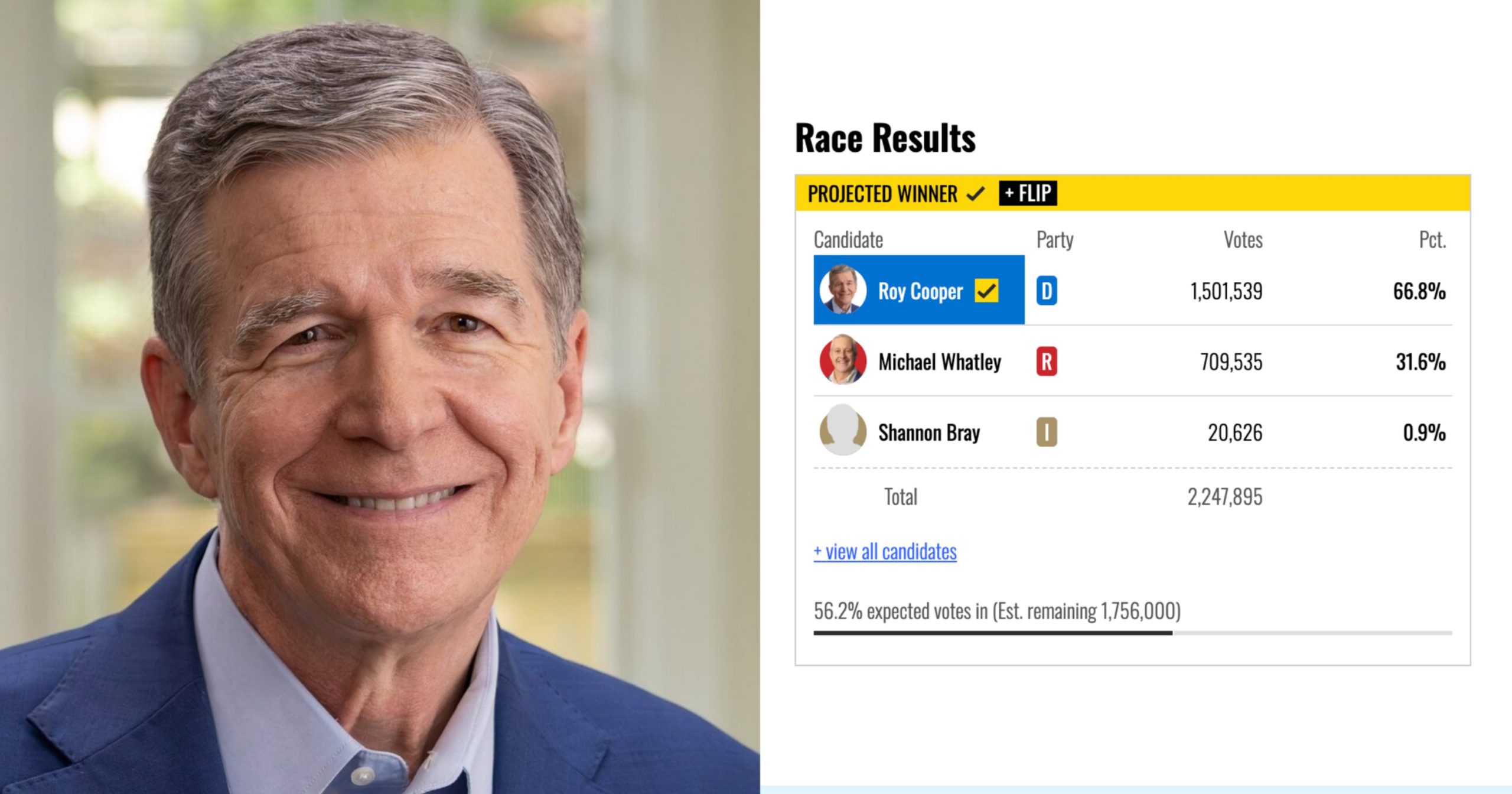
Roy Cooper, the former governor with a quiet demeanor and a steel spine, didn’t just win. He executed a takeover.
At 9:47 PM Eastern, the Associated Press called it. North Carolina’s Senate seat — a Republican stronghold for over a decade — had fallen. The margin? A staggering 30 points. Cooper didn’t just flip it. He obliterated the competition.
But this wasn’t luck. This was a meticulously planned strike, months in the making. And the target? Donald Trump’s hand-picked candidate, Michael Whatley.
Behind the scenes, Cooper’s team had been intercepting key data. Internal polls. Voter sentiment. The cracks in the GOP armor. They knew something the Republicans didn’t: the tide had turned.
The Threat: Whatley’s Secret Scheme
While Cooper campaigned on kitchen-table issues — gas prices, groceries, healthcare — Whatley was building something else entirely.
Leaked documents reveal a multi-million-dollar operation designed to paint Cooper as soft on crime. The centerpiece? A debunked claim that Cooper was responsible for freeing a man accused of a horrific murder.
It was a gamble. A desperate one.
Whatley, the former RNC chair, had promised to be Trump’s loyal soldier. He vowed to push the president’s agenda, no matter the cost. But his campaign was hemorrhaging. Internal memos showed panic. They knew the numbers were bad. They just didn’t know how bad.
“They threw everything at the wall. Nothing stuck.” — A senior GOP strategist, speaking on condition of anonymity.
The final blow? Trump himself. The president’s historically low approval ratings became an anchor around Whatley’s neck. Every time Trump opened his mouth, Cooper’s lead grew.

The Trump Card: Tillis’s Revenge
But the real twist? It came from within.
Senator Thom Tillis — the Republican whose seat was up for grabs — had quietly stepped aside. His reason? A falling out with Trump over the “One Big Beautiful Bill Act.” Tillis voted against it. Trump threatened to primary him. So Tillis walked.
And he took his revenge with him.
Sources close to Tillis say he refused to endorse Whatley. He refused to campaign. He refused to help. In the final weeks, Tillis’s silence spoke volumes. It was the ultimate betrayal — a quiet dagger to the heart of Trump’s machine.
“Tillis didn’t just sit it out. He handed Cooper the keys.” — A former Tillis staffer.
That was the trump card. The unsealed evidence of a party at war with itself. Cooper didn’t just beat Whatley. He beat the chaos.

Now, Cooper heads to Washington. The first Democratic senator from North Carolina since 2008. A symbol of a shifting South. A warning shot to the GOP.
But the question remains: Was this a fluke, or the beginning of a new era? And what does it say about a party that would rather destroy itself than unite?
The answer may define American politics for a generation.