The Blackout That Wasn’t
On October 19, the signal died.
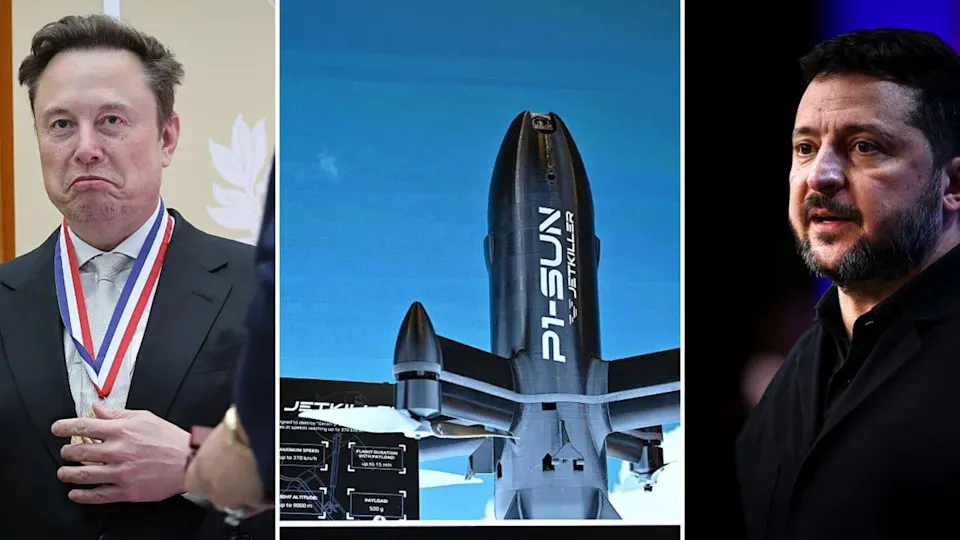
Starlink and Starshield terminals across Ukraine’s front line slowed to a crawl—130 to 161 km/h, too slow for strike drones to finish their missions. Logistics froze. Interceptors went blind.
Then came the tweet from Elon Musk: “Any limits on speed or usage are decided by the US military and ultimately POTUS.”
Behind the scenes, the Wall Street Journal reported that Musk himself had ordered the slowdown. Some of Ukraine’s most lethal drones became practically useless. Strike operations stalled.
But while the world watched the satellites go dark, something else was happening inside a Ukrainian defense lab.
The Silent Workaround
Fire Point CEO Iryna Terekh had been preparing for this moment.
In an interview with Reuters, she revealed that her company had already built systems designed to finish a mission without a satellite link. Navigation that works without any external signal. No Starlink. No GPS. No help from anyone.
“Fire Point systems are designed to finish a mission without a satellite link. Navigation that works without any external signal is a priority.”
Terekh declined to disclose how it works. But she confirmed the obvious: Russia’s jamming playbook—the one that targets satellite signals—just lost its biggest target.
And Kyiv just lost its biggest dependency.
The Threat: A 10-Day Countdown to Collapse
The Starlink slowdown wasn’t an accident. It was a warning.
For years, Ukraine’s long-range strikes depended on SpaceX’s satellites. Every drone, every missile, every mission—tethered to a private American company and a mercurial billionaire.
When that tether was pulled, the damage was immediate. The Wall Street Journal reported that Musk ordered the slowdown for the military version of Starlink. President Trump allegedly called Musk and asked him to lift the restrictions.
But the message was clear: Ukraine’s arsenal had a single point of failure—and it wasn’t in Kyiv.
Russia’s electronic warfare units had spent years trying to jam Starlink. They failed. But they didn’t need to succeed. All they needed was for someone else to flip the switch.

The Trump Card: Missiles That Don’t Need Permission
Fire Point didn’t wait for the signal to come back.
They unveiled the FP-7—a tactical ballistic missile with a 300-kilometer range. It has already seen combat against Russian-occupied territory. It can target Iskander missile launchers before they relocate. It can protect Ukrainian cities without waiting for Patriot interceptors.
And then there’s the FP-9—an 800-kilometer ballistic missile, ready for combat this year.
But the real trump card isn’t the range. It’s the independence.
Terekh admitted the workaround currently covers only 15–20% of what full Starlink access over Russia would provide. But that 15–20% is enough to keep the missiles flying. Enough to keep the pressure on. Enough to make Russia’s jamming playbook irrelevant.
“We found a way to technologically overcome this challenge, but this only covers probably 15 to 20% of what we could do if the Starlink was working.”
Fire Point is also coordinating the Freyja European missile-interception project—virtual-target testing by year’s end, physical interception next year. Ukraine is building its own low-orbit satellite network. The dependency is being dismantled, piece by piece.

The Question That Remains
The signal went dark. The missiles kept flying.
But the 10-day blackout exposed something deeper: a war fought on a private company’s terms, with a single switch that can be flipped by a billionaire or a president.
Ukraine is building its way out. But at 15–20% capacity, the gap between dependence and sovereignty is still a battlefield.
So here’s the question: If a private company can silence a nation’s defenses with one order, who really controls the war?