The Strike
It was supposed to be a whisper.
Instead, it became a roar.
On October 31, 2026—just days before the midterms—a Threads account called @demsmight dropped a single post. No video. No fancy graphics. Just words.
“We’re working on a new massively powerful anti-Musk ad. To be released soon. Make sure to follow us here so you don’t miss it. Meta is constantly throttling our content as the midterms zero in. Let’s beat the algorithm together, the same way millions of Brazilians did it.”
Within hours, the post had 5,000 likes. 539 reposts. 80 replies.
And a target on its back.
Meta’s algorithms throttled it. But the message was already out. The fuse was lit.
Behind the scenes, a coalition of Democratic strategists, grassroots donors, and digital guerrilla fighters had been working for months on what they called “the most powerful anti-Musk ad ever made.” They had the money. They had the message. And they had a plan to bypass the tech giants entirely.
But they also had a problem: Meta.
According to internal sources, Meta’s content moderation team had been flagging the ad’s assets as “sensitive” and “potentially misleading.” The reach was being suppressed. The ad was being buried before it even launched.
So the team made a decision: they would leak the ad’s existence to the public. They would turn the censorship into the story.
And it worked.
Now, the question isn’t whether the ad will run. It’s what happens when it does.
The Threat
Elon Musk has spent years building an empire of influence. But his most ambitious project isn’t a rocket or a car. It’s a political machine—one that operates in the shadows, fueled by dark money and data.
Leaked documents from a Musk-funded super PAC reveal a multi-million-dollar scheme to buy the midterms. The plan: flood key swing states with ads, billboards, and digital propaganda that demonize progressive candidates and elevate Musk’s hand-picked allies.
In Wisconsin, Musk’s PAC spent over $5 million to support conservative Brad Schimel in a high-stakes Supreme Court race. The Democrats responded with their own seven-figure campaign—but it was just a warm-up.
“Elon Musk is out of control, and now the power-hungry billionaire is unloading millions to buy the Wisconsin Supreme Court,” said one ad.
But the real threat is bigger than any single race.
Sources close to the investigation say Musk’s team has been exploiting loopholes in campaign finance laws to funnel money through shell PACs. They’ve been harvesting voter data from social media platforms—including Meta—to build psychological profiles of undecided voters. And they’ve been testing ad campaigns that use AI-generated content to manipulate emotions.
The goal? To create a permanent advantage for Musk’s political allies—and to make sure no one can stop him.
But the Democrats have a secret weapon of their own.
The Trump Card
While Musk was building his machine, a small team of Democratic operatives was building something else: a counter-algorithm.
They call it “The Brazil Protocol.”
It’s a decentralized distribution network that uses encrypted messaging apps, peer-to-peer sharing, and old-fashioned word-of-mouth to bypass platform censorship. The same tactics that helped millions of Brazilians organize against Bolsonaro are now being deployed in the US.
And the anti-Musk ad is the first test.
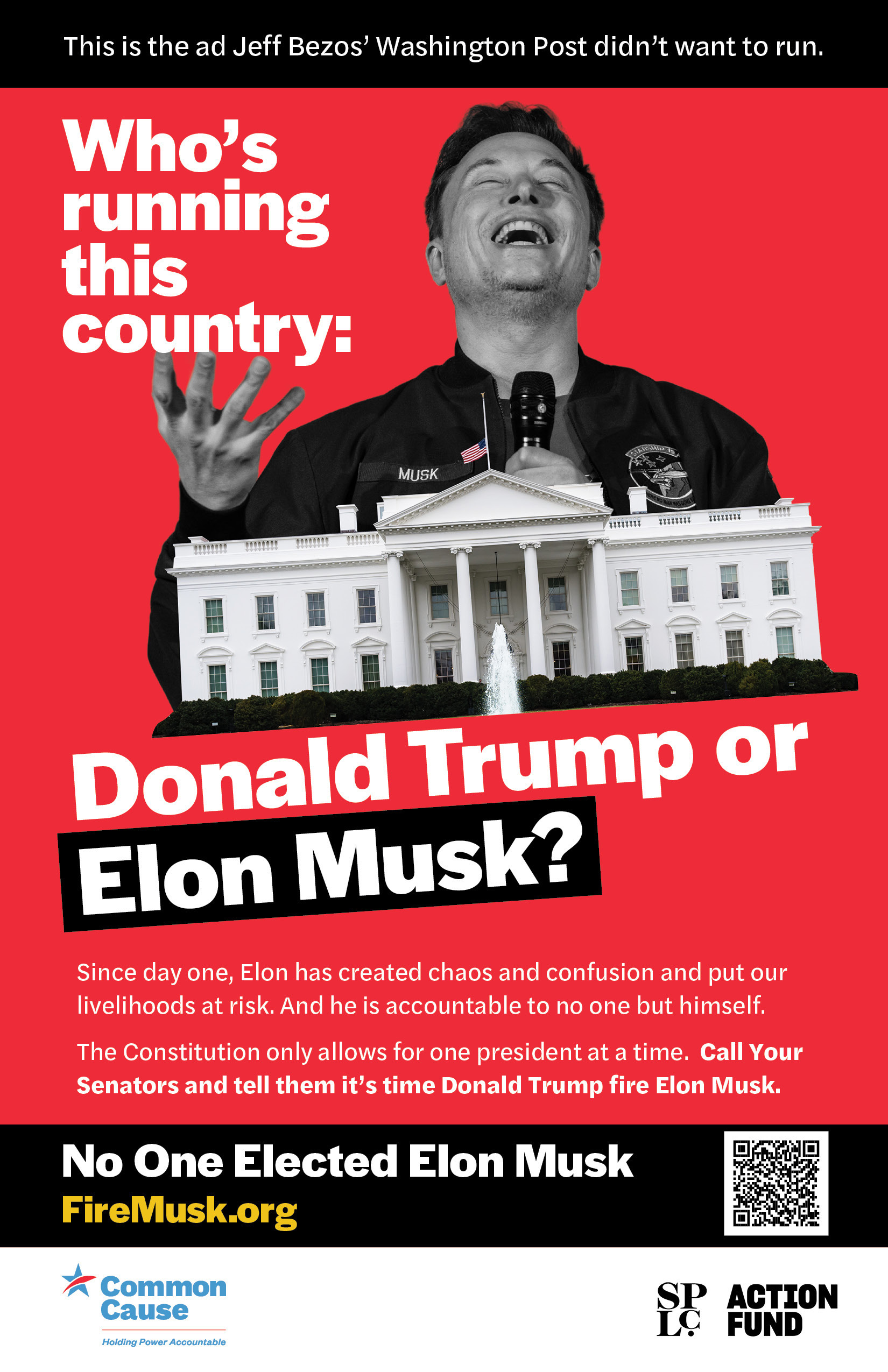
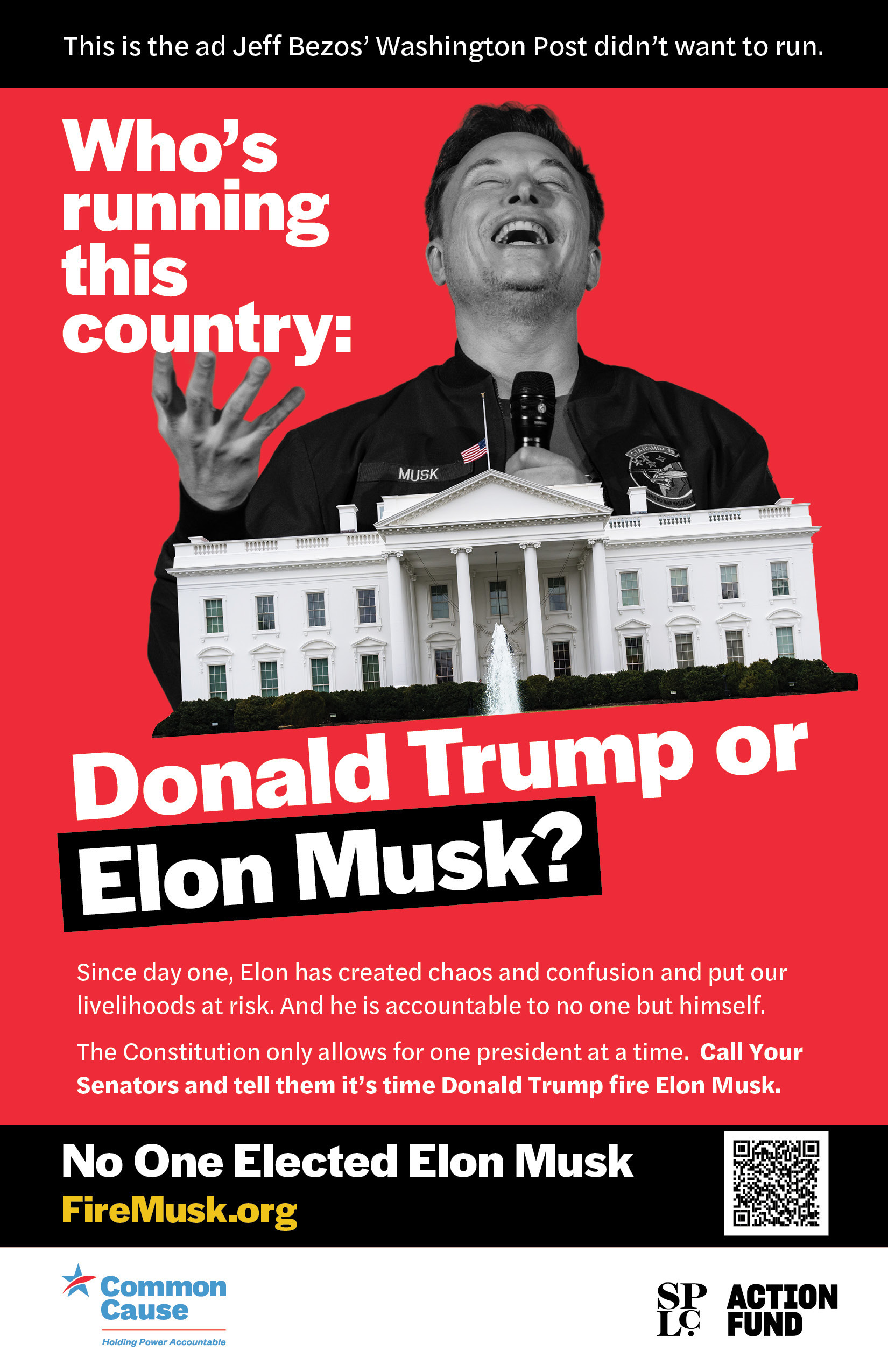
According to sources, the ad is devastating. It uses Musk’s own words against him—clips from interviews, tweets, and speeches—to paint a portrait of a man who is out of control, power-hungry, and dangerous. It ends with a simple question: “Who’s running this country: Donald Trump or Elon Musk?”

The ad was supposed to be published by major newspapers, including the Washington Post. But at the last minute, the Post pulled the plug—refusing to run a wrap ad that would have reached 500 White House subscribers. The reason? Fear of retaliation from the Trump administration.
“The Post seems to have forgotten that democracy also dies when a free press operates from a place of fear or compliance,” said Virginia Kase Solomón, president of Common Cause.
But the Democrats were ready. They had already built a backup plan. The ad will now be distributed through alternative channels—encrypted apps, email lists, and a network of volunteers who will share it across every platform they can.
And they’re asking the public to help.
“Follow us here so you don’t miss it,” the Threads post said. “Let’s beat the algorithm together.”
It’s a gamble. But it’s one they believe they can win.
The Final Question
The ad is coming. The algorithm can’t stop it. But the real battle is just beginning.
In a world where billionaires can buy elections and tech giants can silence voices, what does it take to be heard?
And if we can’t trust the platforms to be fair, who will hold them accountable?
The answer, it seems, is us.