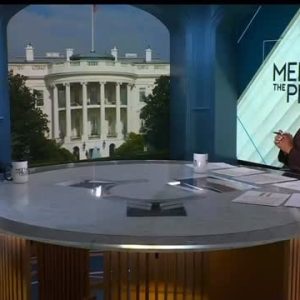
Speaker Mike Johnson has issued a stark ultimatum to Republicans regarding the upcoming midterm elections. The message is blunt: if Democrats win control of the House, President Donald Trump will face immediate impeachment, and his family, Cabinet, donors, and friends will be aggressively investigated and sent to prison. This is not a standard political warning. It is a declaration of total institutional warfare.
By elevating the threat from political defeat to personal incarceration, Johnson is radically altering the stakes of the midterms. He is telling the Republican base and its deepest-pocketed financiers that the election is not about passing legislation. It is about legal survival. The gavels of congressional committees are no longer being framed as oversight tools, but as weapons of mass political destruction.
The most revealing aspect of this strategy is the power dynamic it exposes. Johnson is not just raising an alarm; he is selling a service. Speaking to allies at the Faith and Freedom Coalition, he explicitly claimed to run the “protection program” for the party. This framing transforms the role of the Speaker from a legislative leader into a defensive shield. He is directly promising to block Democratic subpoenas and investigations, but only if Republicans give him the majority to do so.
This creates a fascinating contradiction between public messaging and strategic reality. On one hand, Johnson is accusing Democrats of planning to weaponize the government against Trump’s inner circle. On the other hand, he is openly admitting that the current Republican majority is actively using its power to run interference. The message to donors is clear: pay for the shield, or face the sword.
There is another way to read this: supporters argue Johnson is simply stating a harsh reality. In an era where congressional investigations frequently overlap with criminal probes, holding the majority is the only way to prevent purely partisan legal harassment. From this perspective, the “protection program” is not obstruction—it is a necessary defense against a political opposition obsessed with lawfare.
Critics, however, see an uncomfortable confession. The promise of a protection program implies that there are vulnerabilities that need hiding. If Trump’s Cabinet, donors, and family members are entirely in the clear, the threat of Democratic investigations should not trigger warnings of long-term prison sentences. This split in interpretation is exactly what makes the midterm battle so explosive.
The consequences of this rhetoric will shape the final stretch of the campaign. Fear is the ultimate fundraising mechanism. By tying the personal freedom of high-profile donors and allies to the outcome of the midterms, Johnson guarantees that the financial resources poured into these races will be unprecedented. The motivation is no longer just power. It is self-preservation.
The midterm elections have crossed a point of no return. The institution of Congress is now openly recognized by leadership as a weaponized entity. The only question left is who will hold the handle, and who will be at the end of the blade.