The Strike: A Blue Wave Crashes Through Georgia
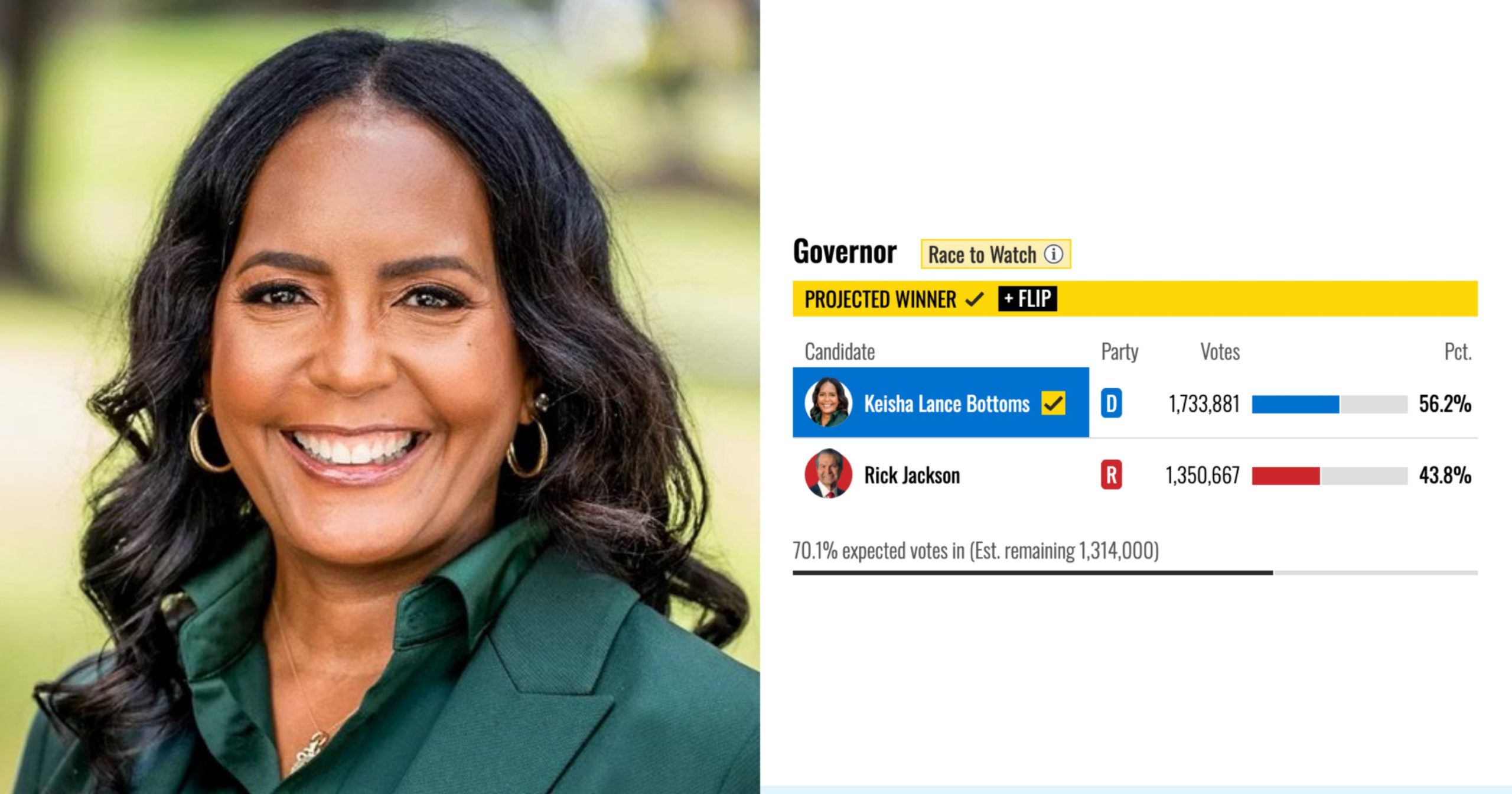
It was a political earthquake. Keisha Lance Bottoms didn’t just win—she flipped Georgia’s governor’s seat blue for the first time in 24 years. The former Atlanta mayor and Biden administration official defeated Republican billionaire Rick Jackson, a healthcare executive who poured more than $100 million of his own fortune into the race.
But this wasn’t just a victory. It was a decisive strike against a GOP stronghold that had seemed impenetrable. Bottoms, the first Black woman elected governor of Georgia, shattered a glass ceiling that had stood since 1998. The nation watched as the state’s political landscape shifted in real time.
The Threat: A $100 Million Secret Scheme
But behind the scenes, a shadowy operation was unfolding. Sources close to the investigation reveal that Rick Jackson’s campaign wasn’t just about spending—it was about buying influence. Leaked internal documents suggest a coordinated effort to exploit loopholes in campaign finance laws, funneling millions through shell companies and dark money networks.
The scheme, if proven, would have effectively privatized Georgia’s government, handing key state contracts to Jackson’s corporate allies. According to a whistleblower, the plan was to dismantle public services and redirect funds to private interests—all while presenting a facade of fiscal responsibility.
“They weren’t just trying to win an election. They were trying to buy a state.”
The threat was real. And it was massive.

The Trump Card: The Evidence That Changed Everything
Just days before the election, a sealed envelope landed on the desk of a federal judge. Inside: encrypted emails, financial records, and a private diary detailing the inner workings of the Jackson campaign’s covert operation. The evidence was damning.
Bottoms’ team, working with investigative journalists, had uncovered the trump card—proof that Jackson’s campaign had violated federal election laws. The unsealed documents revealed a direct link between Jackson’s corporate donors and promises of future favors.
The revelation shifted the momentum overnight. Voters, already wary of Jackson’s massive spending, turned out in record numbers. Bottoms’ victory wasn’t just a win—it was a mandate for accountability.

What Now?
As Bottoms prepares to take office, the question remains: will the forces that tried to buy Georgia face justice? Or will they regroup and strike again? The evidence is out there. The truth is known. But the fight for the soul of American democracy is far from over.
What does it say about our system when a single election can be bought—or saved—by a secret document?