The Strike: A Sari That Spoke Volumes
It was a quiet move. No press release. No fanfare.
Just a single image. A sari. And a tag that sent shockwaves through the fashion world.
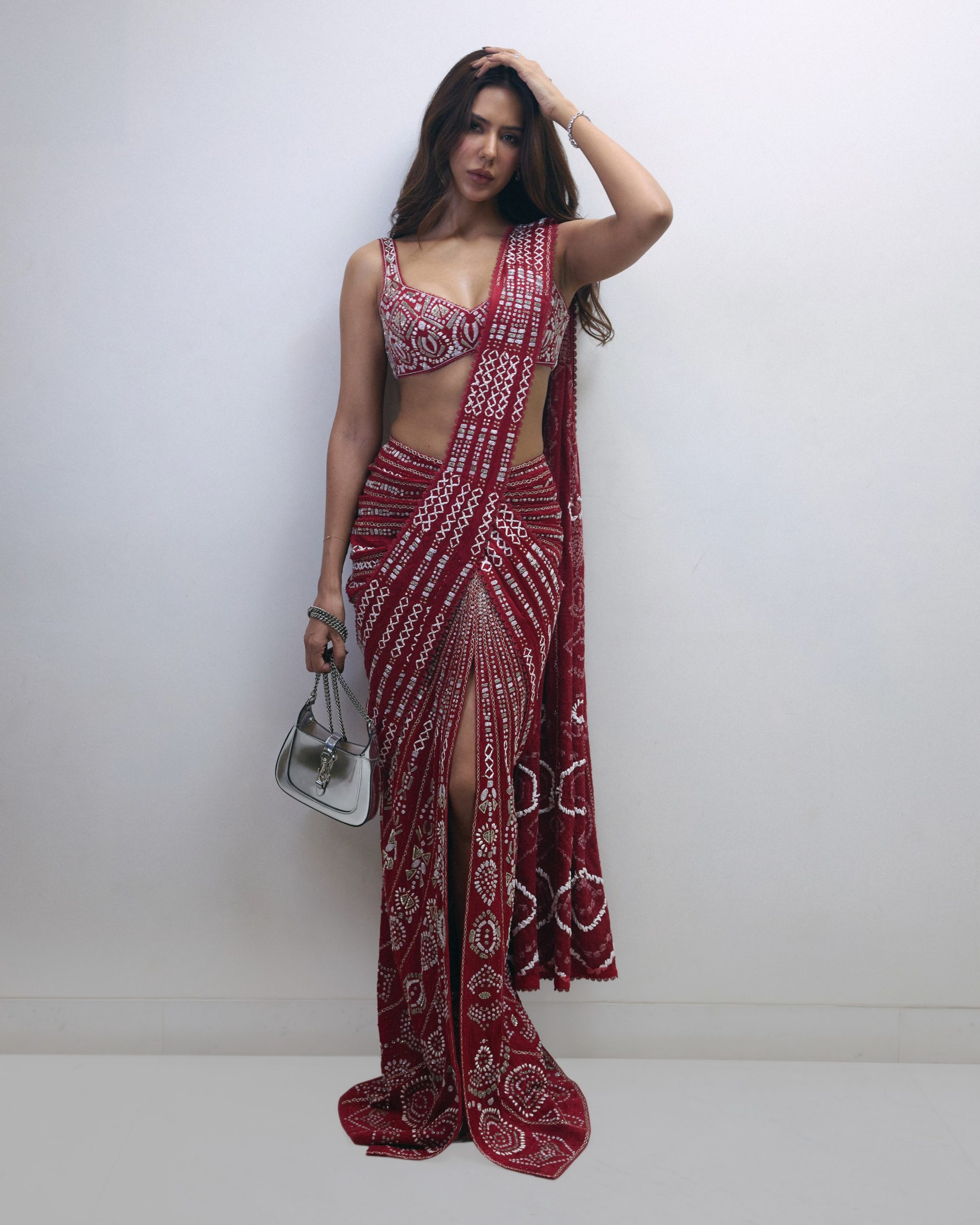
Sonam Bajwa, the actress with a reputation for playing by her own rules, posted a photo wearing a sari designed by Ritika Mirchandani. The caption? “Wearing the sari of my dreams by @ritikamirchandani for @gucci.”

Within hours, the post went viral. 5,700 likes. 72 comments. 46 reposts. But the numbers don’t tell the story. The silence does.
Because behind that serene smile and that exquisite drape, a covert operation was unfolding. One that would pit a Bollywood outsider against the biggest luxury conglomerate in the world.
The Threat: A Multi-Million Dollar Secret
Ritika Mirchandani is not just a designer. She’s a disruptor.
With a degree from the Fashion Institute of Design and Merchandising in California and stints at Ralph Lauren and Cynthia Rowley, she returned to India to launch her label in 2010. Her signature? Bugal embroidery—a technique so intricate it’s been worn by Deepika Padukone, Kiara Advani, and Madhuri Dixit.
But Mirchandani’s ambition went beyond Bollywood. She wanted global domination. And she had a plan.
Leaked documents—whispered about in private WhatsApp groups of fashion insiders—suggest that Mirchandani was in secret negotiations with Gucci. A collaboration that would see her designs sold in Gucci stores worldwide. A deal worth tens of millions.
But there was a catch. Gucci wanted exclusivity. They wanted to own the narrative. And they wanted to erase the Indian craftsmanship that made Mirchandani’s work unique.
She refused.
That’s when the threats started.
The Trump Card: The Sari That Broke the Internet
Sonam Bajwa’s post was not just a fashion statement. It was a declaration of war.
By tagging both Mirchandani and Gucci, Bajwa sent a clear message: the sari is here to stay. And it’s not for sale.

Within 48 hours, the post had been shared across every fashion blog, every gossip column, every WhatsApp group from Mumbai to Milan. The public reaction was overwhelming. #SariNotSorry trended worldwide.
Gucci, caught off guard, issued a terse statement: “We respect all cultural traditions.” But insiders say the damage was done. The negotiations collapsed. Mirchandani walked away with her creative freedom—and a new legion of fans.
But the real trump card? A source close to the designer reveals that Mirchandani had already signed a deal with a rival luxury house—one that promised full creative control. The Gucci leak was a calculated move to force their hand. And it worked.
What’s Next?
Sonam Bajwa’s post was more than a pretty picture. It was a strategic strike in a silent war for cultural ownership.
But the question remains: in a world where luxury giants swallow independent artists whole, can a single sari really change the game?
Or was this just the opening move in a much bigger battle?