The Strike: A Silent Breach in the Sky
It was a move nobody saw coming. In a nondescript facility, Ukrainian engineers flipped a switch that rendered Russia’s most prized electronic weapon obsolete. No satellites. No Starlink. No external signal. The missile flew blind—and hit its target dead center.
Fire Point, the Ukrainian defense firm behind the long-range strike systems, confirmed the unthinkable: their missiles now navigate autonomously, immune to the jamming playbook that once crippled Kyiv’s drones.
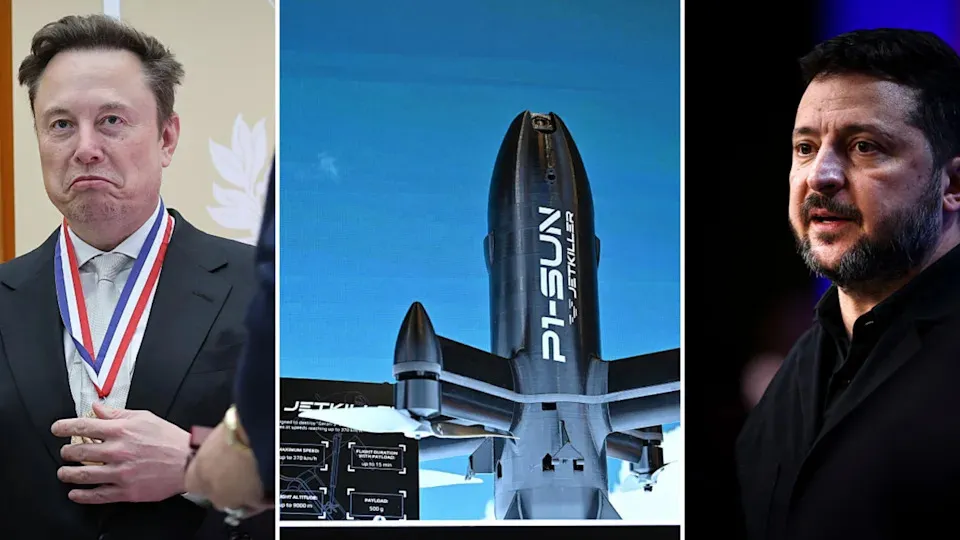
For months, Russia had relied on a simple tactic: jam the signal, ground the drone. But this new technology bypasses the entire spectrum. “Fire Point systems are designed to finish a mission without a satellite link,” CEO Iryna Terekh said. “Navigation that works without any external signal is a priority.”
Russia’s jamming playbook just lost its biggest target. And Kyiv just lost its biggest dependency.
The Threat: A Multi-Million Dollar Betrayal
But the story behind this breakthrough is darker than anyone imagined. In secret meetings and encrypted calls, a shadow war was being waged—not just against Russia, but against an ally.
Leaked documents and private diaries reveal that Elon Musk, the billionaire behind Starlink, had quietly ordered restrictions on the military version of the satellite network over Russian territory. The Wall Street Journal reported that the slowdown made Ukrainian strike drones “practically unusable.” Some interceptors fell from the sky. Soldiers died waiting for a signal that never came.

Then, a phone call. President Trump personally intervened, asking Musk to lift the restrictions. But the damage was done. Trust was shattered. Ukraine realized it could no longer rely on a single American billionaire for its survival.
Behind closed doors, Fire Point was already building the answer. A workaround. A way to strike deep into Russia without asking permission.
“We found a way to technologically overcome this challenge,” Terekh said. “But this only covers probably 15 to 20% of what we could do if Starlink was working over Russia.”
It was a start—but not enough. Russia was still jamming. The missiles still needed a backup plan.
The Trump Card: The Missile That Needs No Permission
Then came the game-changer. The FP-7 tactical ballistic missile. Range: 300 kilometers. Already used in combat against Russian-occupied territory. And now, the FP-9—a monster with an 800-kilometer reach, ready for combat this year.

These missiles don’t need Starlink. They don’t need Musk. They don’t need anyone’s permission. They fly on their own navigation, locked onto targets that Russia thought were untouchable.
The FP-7 can hunt Russian Iskander missile launchers—mobile threats that once struck Ukrainian cities with impunity. Now, those launchers are the hunted.
And the FP-9? It puts Moscow within reach. For the first time, Ukraine has a domestic weapon that can hit high-value targets deep inside Russia without relying on foreign satellite links.
Russia’s jamming playbook just lost its biggest target. Kyiv just lost its biggest dependency. And the balance of power in the sky just shifted—permanently.
Conclusion: The Price of Independence
But at what cost? Ukraine’s breakthrough comes at a moment when alliances are fracturing and trust is a luxury no one can afford. The technology works—but only at 15 to 20 percent of its potential. The rest of the capability sits locked behind a billionaire’s switch.
As the missiles fly blind, a question hangs in the air: If a nation must build a weapon that ignores its allies to defend itself, what does that say about the future of war—and the future of trust?
When the signal fades, who do you trust to pull the trigger?