The Silence Before the Strike
It was a kill switch. A single command from a billionaire’s satellite network could ground Ukraine’s deadliest weapons. And it did.
Then came the workaround. Quiet. Encrypted. Unstoppable.
Fire Point, Ukraine’s homegrown missile manufacturer, announced on October 30 that its long-range strike systems can now complete missions without Starlink or any external satellite link. The revelation came from CEO Iryna Terekh in an interview with Reuters.
“Fire Point systems are designed to finish a mission without a satellite link. Navigation that works without any external signal is a priority.” — Iryna Terekh, CEO of Fire Point
The move is a direct counter to Russia’s electronic warfare playbook—and a quiet rebellion against Kyiv’s dependence on Elon Musk’s SpaceX.
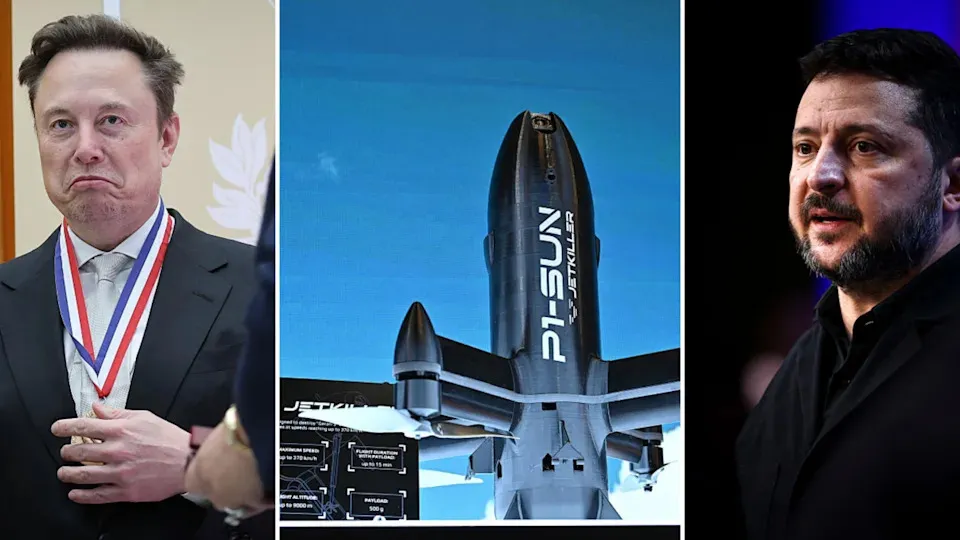
The Threat: A Multi-Million-Dollar Chokehold
For months, Russia’s jamming units had one target: Starlink. They built a playbook around it. Blast the signal. Blind the drones. Watch Ukraine stumble.
But the real threat came from the West.
On October 19, Starlink and Starshield equipment mysteriously stopped working at speeds of 130-161 km/h along the front lines. Logistics froze. Drones fell from the sky.
Two days later, Elon Musk tweeted: “Any limits on speed or usage are decided by the US military and ultimately POTUS.”
Then The Wall Street Journal dropped a bombshell: Musk personally ordered the slowdown for Ukraine’s military-grade Starlink. Some strike drones became practically useless. Interceptor drones went blind.
According to WSJ, President Trump called Musk and asked him to lift the restrictions. But the damage was done. Ukraine’s biggest dependency had become its biggest vulnerability.

The Trump Card: Missiles That Fly Blind—On Purpose
Fire Point didn’t wait for permission.
They built a navigation system that needs no satellite. No external signal. No Musk. No White House switch.
“We found a way to technologically overcome this challenge,” Terekh said. She declined to give details. But she did give a number: 15 to 20%. That’s how much of Starlink’s full capability their workaround currently covers.
It doesn’t sound like much. Until you see what they’ve already done with it.
The FP-7 tactical ballistic missile—range 300 kilometers—has already seen combat. It struck a target in Russian-occupied territory. And it’s designed to hunt down Russia’s Iskander missile launchers before they can relocate.
But the real trump card is the FP-9. Range: 800 kilometers. Ready for combat this year.
With the FP-9, Ukraine can reach high-value targets deep inside Russia—without asking anyone for a signal.

The New Rules of War
Russia’s jamming playbook just lost its biggest target. Kyiv just lost its biggest dependency.
But the war isn’t over. Fire Point’s breakthrough covers only a fraction of what full Starlink access could do. Ukraine is still building its own low-orbit satellite network. Still coordinating the Freyja European missile-interception project. Still fighting for every advantage.
The difference now? The kill switch is gone.
No one can flip a switch and ground Ukraine’s missiles. No one can slow them down with a tweet. No one can decide from a boardroom whether Kyiv can defend itself.
That’s not just a technological breakthrough. It’s a declaration of independence.
“We have built with this in mind. Fire Point systems are designed to finish a mission without a satellite link.”
But the question remains: If Ukraine can now strike without anyone’s permission, what happens when the next war is fought entirely off the grid—and the only limit is the imagination of the engineers?
And more importantly: Who will control the next kill switch?