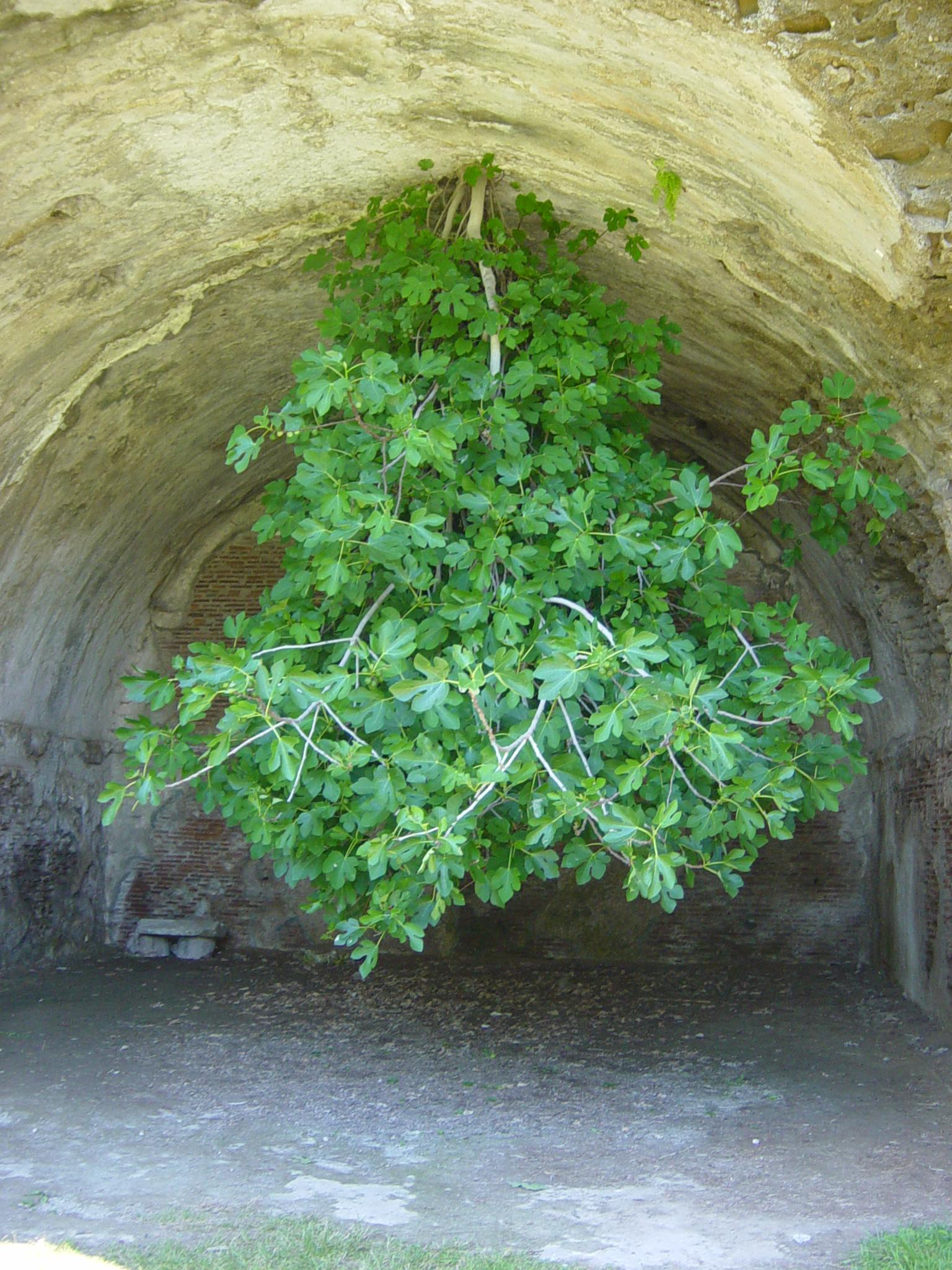
This gravity-defying fig tree in the ancient ruins of a Roman villa continues to grow downwards year after year, even bearing figs.
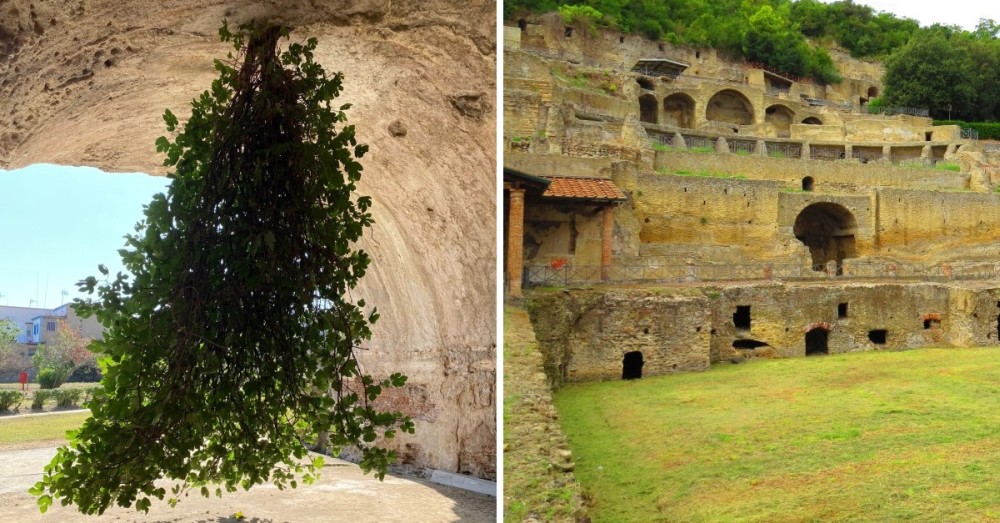
This fig tree has been growing in an unusual way. Image credit: Crescendo104 & Gianfranco Vitolo
Baiae was an ancient Roman town located on the northwest shore of the Guld of Naples, in Phlegraenan Fields, which is an active volcanic area. The ancient town was a notorious resort for the wealthiest aristocrats of Rome. Even emperors, such as Julius Caesar, Nero, and Caligula had villas in the luxurious town. For centuries, especially around the fall of the Roman Republic, Baiae was considered as superior as Capri, Pompeii, or Herculaneum; many chroniclers of the time describe the exclusive seaside town as the Beverly Hills of those days, where the elite of Roman society could exclude themselves in a luxurious environment, far from the watchful eye of Rome.
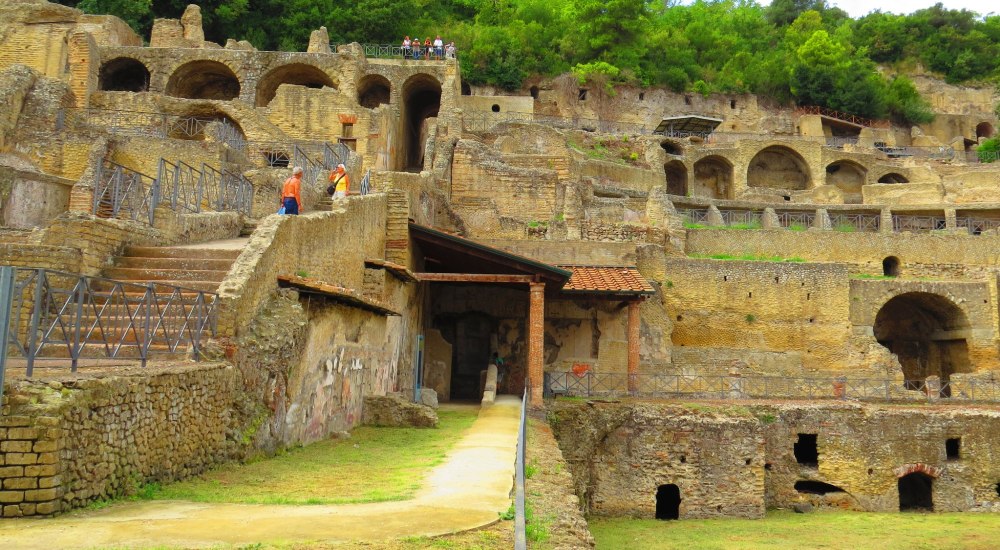
Baiae was an ancient luxury resort in Rome, notorious for its villas and wealthy guests. Image credit: Gianfranco Vitolo
Most of the villas were built in a very bold fashion, from 100 BC to AD 500, with much of the town becoming imperial property under the rule of Augustus. Most villas were located on terraces along the coastline, and some of them even had private fisheries, so they could provide themselves with fresh fish every day. An elegy by Sextus Propertius, written in the Augustan Age describes Baiae as a “den of licentiousness and vice”, where the hedonistic residents and guests indulged in beach parties and long drinking sessions.
Unfortunately, Baiae was sacked and looted during the barbarian invasion of Rome, and again by Muslim raiders in the 8th century. It was totally deserted by the 1500s due to a recurring malaria epidemic. Furthermore, the lower parts of the town are now underwater, due to volcanic activity in the area, that lowered the land. Today, the modern city of Bacoli holds the ancient ruins of Baiea. The once luxurious resort town is now a venerated tourist attraction in the city, and the submerged villas and the fine architecture are preserved in an underwater archaeological park.
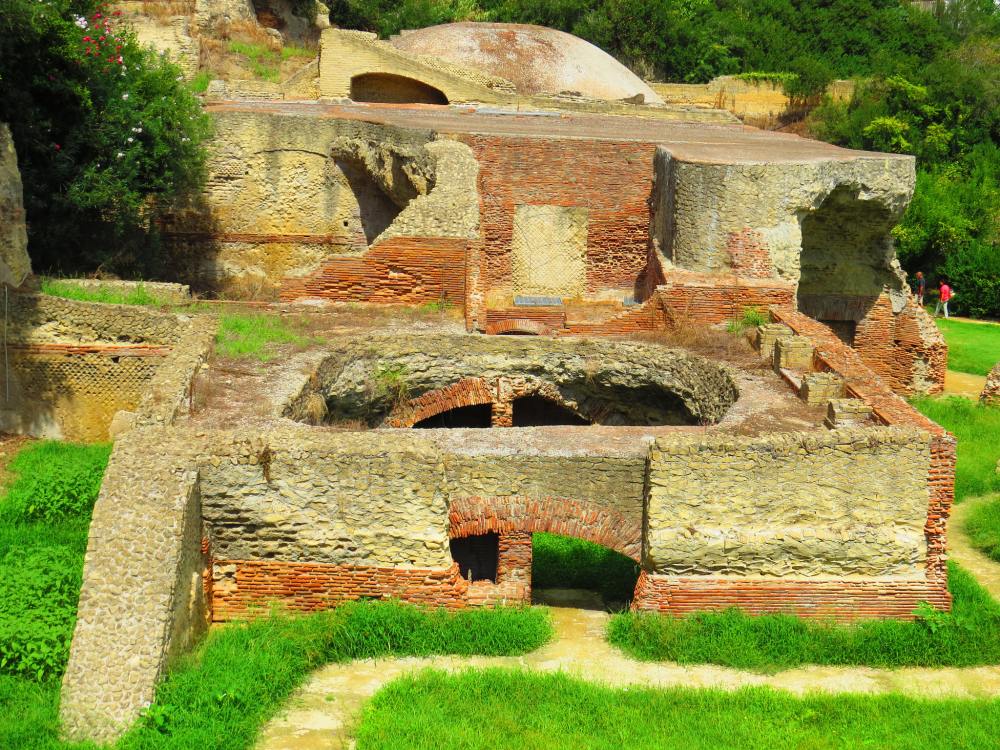
Some of the villas even had private baths. Image credit: Gianfranco Vitolo
Among the ruins of Baiae, keen-eyed observers can see something else of interest apart from the ancient Roman town: a large fig tree growing downwards from the ceiling of an archway. While these aggressive trees can often be seen growing out of bricks and buildings, a fully inverted one is quite rare.
The common fig tree, Ficus carica, is native to the Mediterranean and western Asia, but now it can be found in every corner of the world. The edible fig was one of the first plants ever that humans cultivated. Ancient fig fossils have been found in the Jordan Valley, north of Jericho, and they date back to 9400-9200 BC. Edible fig was very widespread in ancient Greece, and it was also a popular food source for the Romans as well. So, it’s quite likely that the wealthy guests of Baiae were feasting on figs too.
Even though the plant itself prefers dry and sunny locations with fresh soil, it can grow out of pretty much anything as long as there’s a small source of water available. Due to its aggressive and strong roots, it can support itself even in the most inhospitable locations, such as an ancient Roman ceiling, for example.
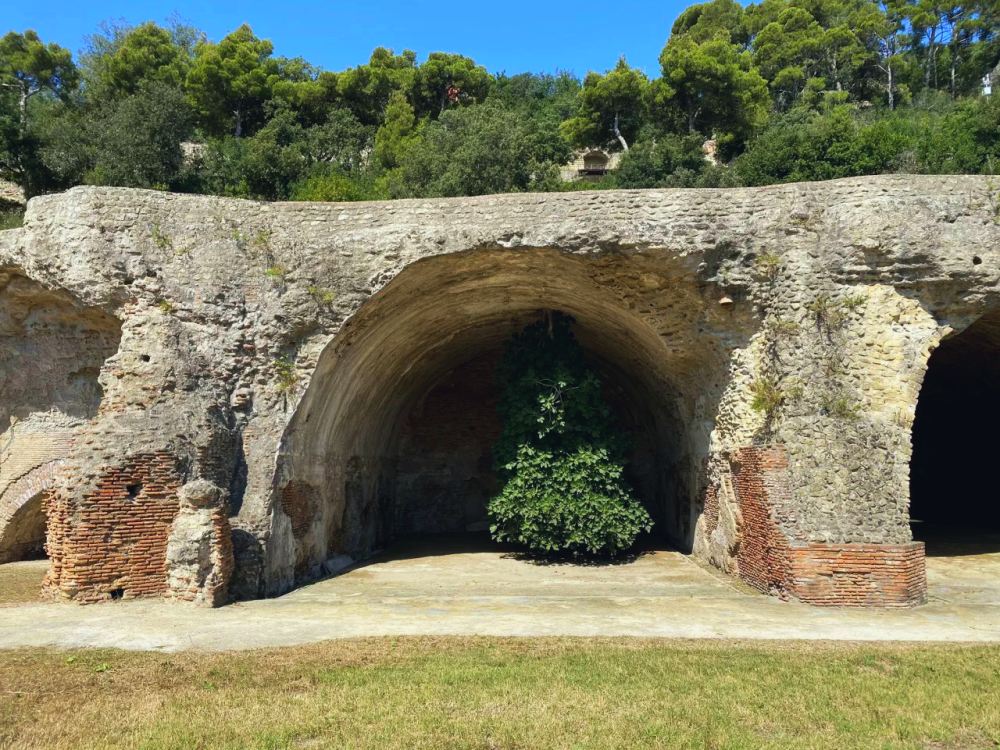
Fig trees are very sturdy; they can live in the most inhospitable environments. Image credit: Crescendo104
It’s very likely that this particular fig tree growing out of the ruins of Baiae gets its source of water from the rain that sips through the rocks. However, it’s impossible to know what made the tree want to grow this way, and what made it possible in the first place. Nevertheless, it is a prime example of life always finding a way.