The extremely well-camouflaged mata mata turtle dresses like a piece of bark with spiky ridged scales, and sucks in prey by creating a vacuum. And it appears to be always smiling.
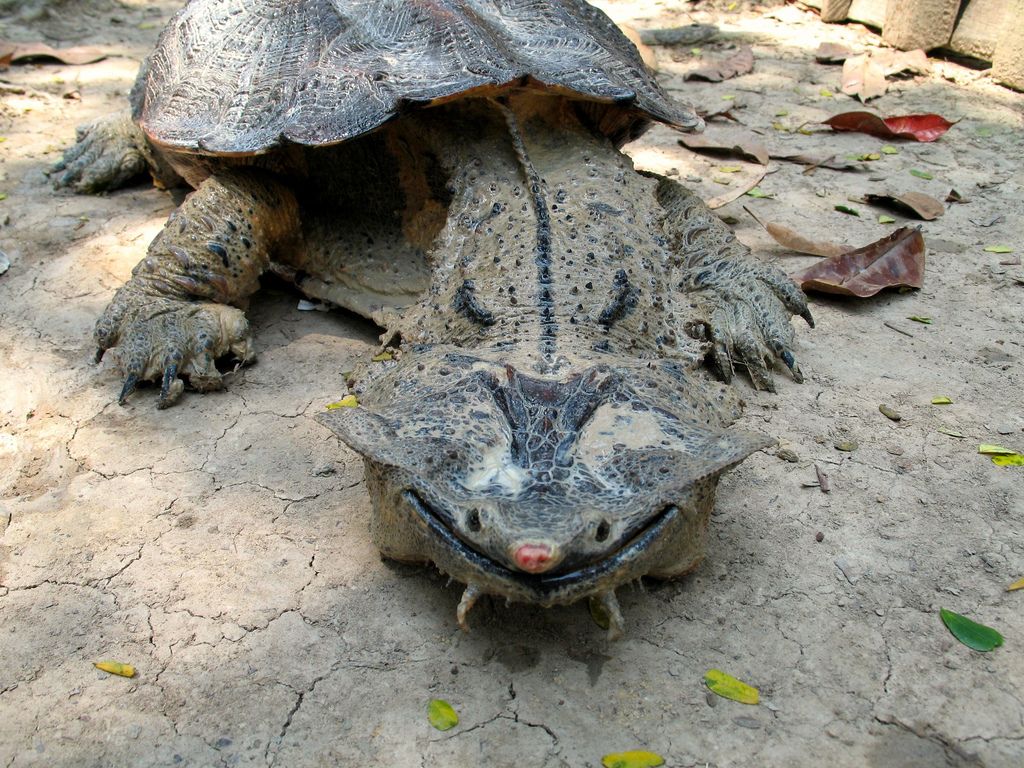
With its disproportionately large head and elongated thick neck, the mata mata looks a bit odd, but always smiles nevertheless. Image credit: Per Se
One of the largest freshwater turtles (their shell can grow to nearly 45 centimeters or 1.5 feet, and weigh about 17 kilograms or 38 pounds), the mata mata is a rather strange-looking animal, at least by human standards. It has a disproportionately large head and elongated thick neck, riddled with warts and ridges known as ‘tubercles‘. On either side of its long snout sits a shiny disc resembling a holed penny. And, its wide mouth makes the animal look as if it always had smile on its face.
But while the mata mata might be ugly to some, their looks are actually an adaptation to their surroundings, bringing a number of benefits.
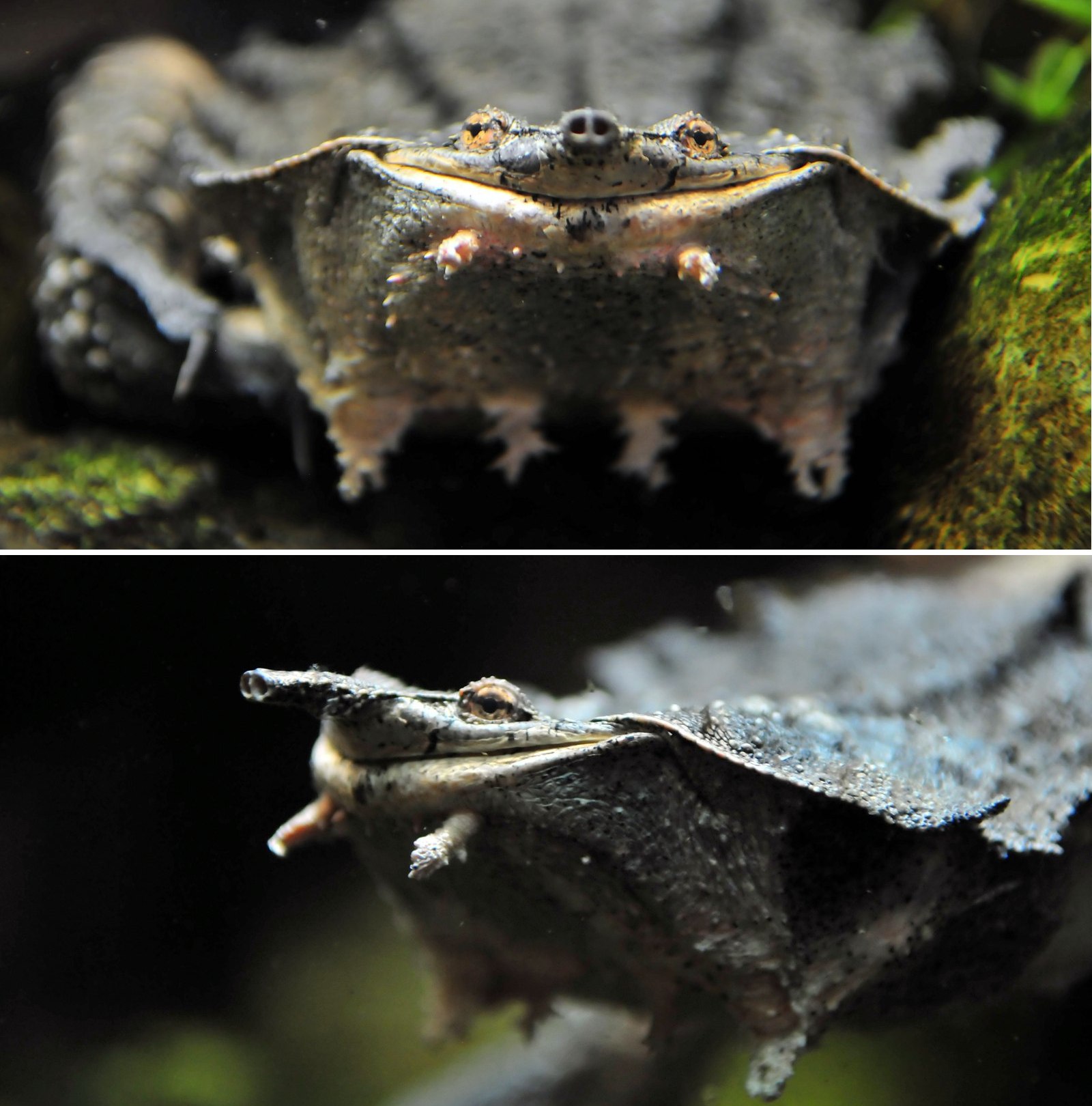
A unique-looking head structure. Image credit: Joachim S. Müller
Found in the Amazon and Orinoco basins in South America, these turtles are carnivorous and nocturnal, preferring to hunt for small fish and aquatic invertebrates at night. But, despite their big shells, they can also become prey to even bigger carnivores, such as crocodiles.
And that’s where those ridges, lumps and flaps of skin that cover their body come into the picture. Although they might make them look ‘aesthetically challenged’ for humans, those skin formations actually have a number of important functions, one of them being is that you resemble decaying wood and swampy putrefaction in general – stuff that’s both relatively common and inedible in the river basins where the mata mata lives.
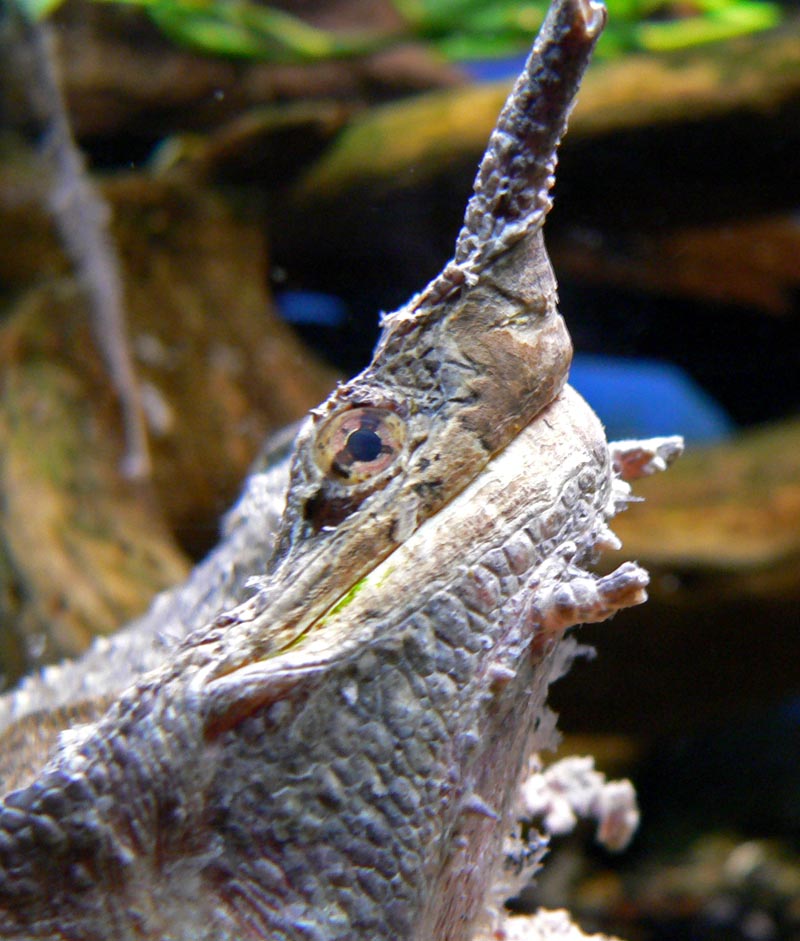
Flaps everywhere. Image credit: Stan Shebs
The turtle’s skin and shell also provides a surface for algae and weeds to grow on, further disguising it as an uninviting piece of rock or wood. It’s an excellent camouflage that does a great job deterring predators – and luring unsuspecting prey.
As the flaps are well-innervated, they pick up vibrations while waving about in the water. They function much like cats’ whiskers: they inform the turtle about the flow and movement of the water, something which is useful both for hunting and avoiding big splashy dangers like crocodiles entering the water.
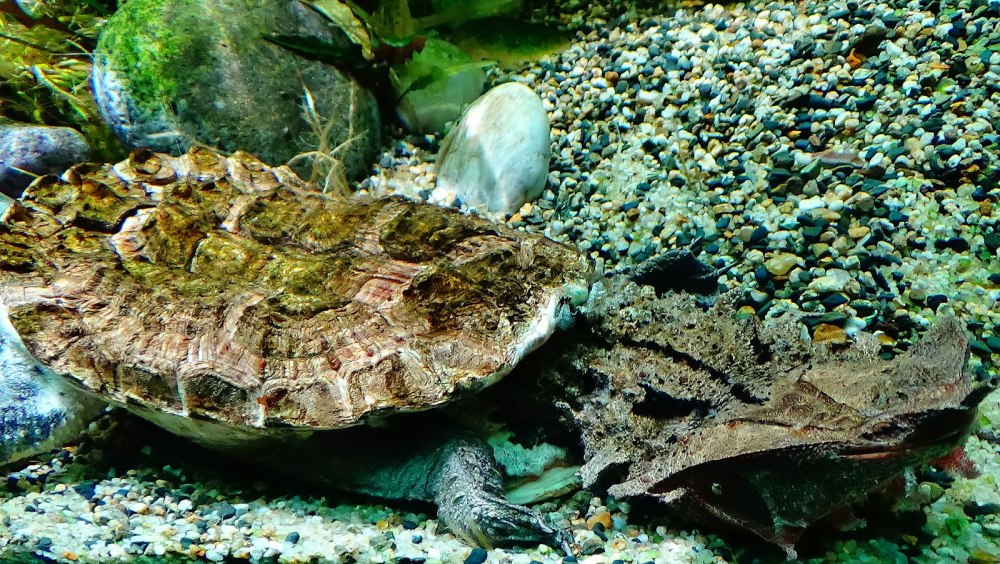
Algae and weeds grow on turtle’s skin and shell, providing further camouflage. Image credit: Cedricguppy – Loury Cédric
The mata mata has a strange way of hunting that involves a unique method of herding its prey. They’ve been observed chasing fish into the corner of an aquarium, where they remain trapped.
With prey finally being close by, the mata mata thrusts out its head and opens its large mouth as wide as possible. Then, it creates a low-pressure vacuum that sucks the prey into its mouth, known as suction feeding. When the turtle snaps its mouth shut, the water is slowly expelled, and the fish is swallowed whole (the mata mata cannot chew due to the way its mouth is constructed.)
Here’s how he does it:
As suggested by the above-mentioned shepherding behavior, the mata mata is probably quite smart. Captive mata matas have even been observed making use of water pump flow to pin down prey in their aquarium.
This indicates that these animals are actually able to solve problems intelligently, and that there’s more going on inside that flat, lumpy head than meets the eye.
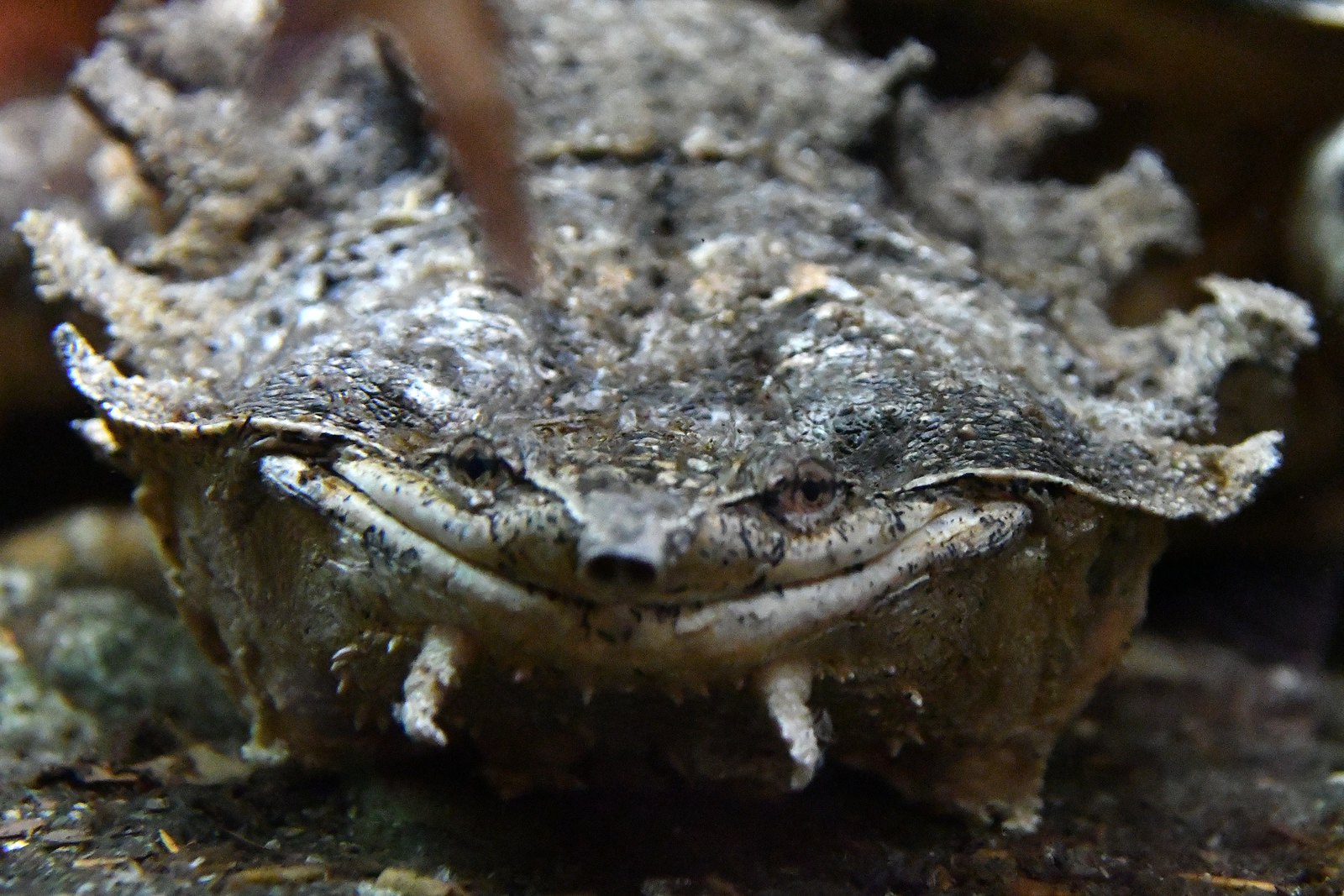
Oh, that eternal smile… Image credit: Joachim S. Müller
Mata mata turtles aren’t currently listed as endangered, but their unique qualities make them a common target of pet hunters, and they often end up in aquariums. But since they are relatively difficult to keep as pets, and don’t like the stress of being handled, they’re often kept poorly and struggle with health issues when held in captivity.