Kitum Cave, located in Mount Elgon National Park, Kenya, is a popular destination for adventurous tourists and spelunkers. However, this place has a dark history, so visiting it might not be such a good idea, after all.
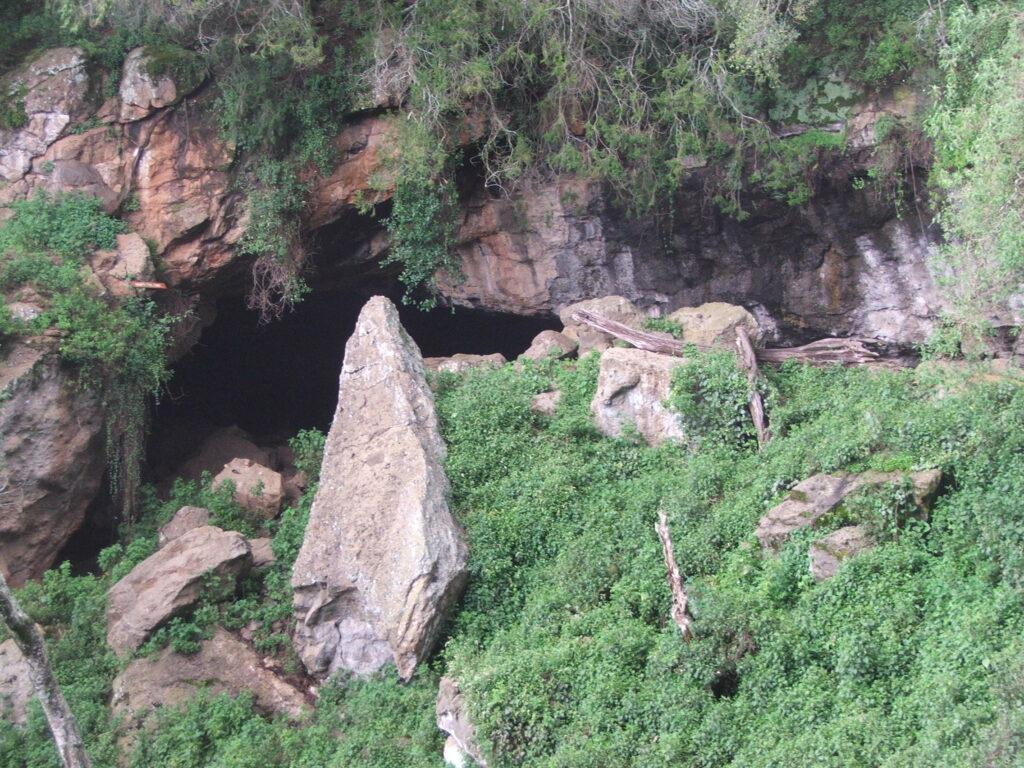
Entrance to the most dangerous place in the world. Image credit: Mount Elgon Foundation
Kitum Cave, situated near the Kenyan-Ugandan border, is a volcanic cave stretching approximately 200 meters (700 ft) deep into the side of Mount Elgon. The cave, which has been called “the most dangerous place on earth,” features walls that are abundant in salt, attracting various animals such as elephants who have been coming here for centuries in search of this essential mineral.
Elephants use their tusks to extract pieces of the cave wall, which they chew and swallow, leading to the creation of scratches and furrows on the walls and potentially contributing to the cave’s enlargement over time.

Elephants come to the cave to “mine” salt. Image credit: Richard Preston
Initially, the marks on the cave walls were thought to have been made by ancient Egyptians while attempting to mine with picks for precious metals or gemstones. However, it was later confirmed that they have been left behind by the visiting elephants.
In addition to the tuskers, other animals like bushbucks, buffalos, and hyenas also visit the cave to consume the salt left behind by the elephants, many of whom fall and perish in a crevasse found deep inside the cave. Around this crevasse, there is also an accumulation of bat guano from fruit-eating and insectivorous bats that inhabit the cave.
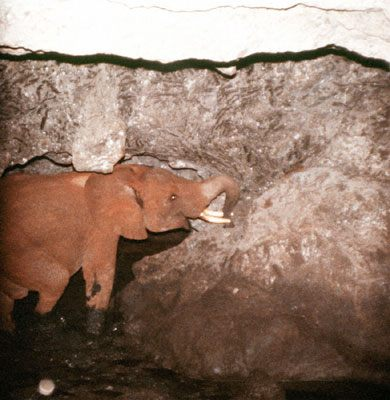
Tusks and tusk marks in Kitum Cave. Image credit: Richard Preston
So what makes this place so dangerous? It is believed that the cave may have been the origin of two of the most lethal diseases known to humans – Ebola and Marburg. Although the exact location of the unknown hosts of these viruses is unknown to scientists, many Ebola and Marburg cases have been linked to the area around Mount Elgon, a unique ecological phenomenon which is home to a rainforest surrounded by dry African savannas.
Several cases have been linked to Kitum Cave itself, too. During the 1980s, two individuals who visited Kitum Cave contracted Marburg virus disease. The first incident occurred in 1980 when a French man passed away after contracting the disease following his visit to the cave. The second incident took place in 1987, when a 15-year-old Danish boy who lived in Kenya also became ill and died after visiting here.

Stairway to hell. Image credit: Nina R
In an attempt to identify the vector species residing in the cave, the United States Army Medical Research Institute of Infectious Disease (USAMRIID) conducted an expedition and collected samples from a wide range of species, including fruit bats. However, no viruses that cause Marburg disease were found, and for now, the animal vector remains unknown.
Expeditions in September 2007 conducted in active mines in Gabon and Uganda discovered conclusive proof of reservoirs of Marburg disease-causing virus in cave-dwelling Egyptian fruit bats. Colonies of the same species of African fruit bats found in Kitum Cave were present in the Ugandan mines, indicating that the sought-after vector at Kitum was indeed the bats and their guano. The study was conducted after two mine workers contracted Marburg virus disease in August 2007, both without any bat bites, suggesting that the virus may spread through inhalation of powdered guano.
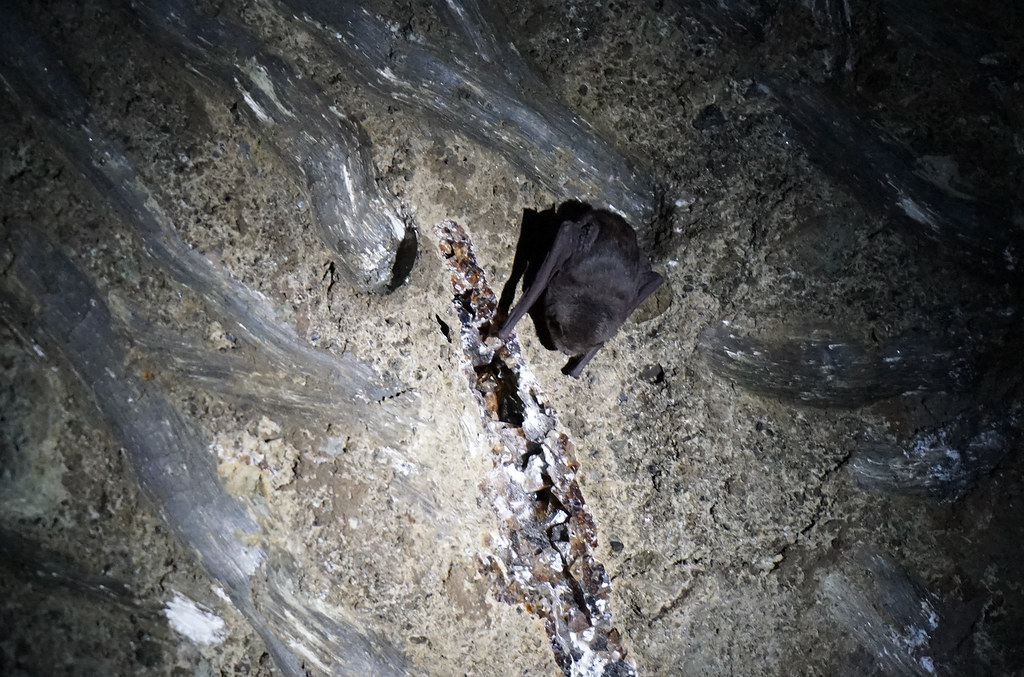
A bat in Kitum Cave. Image credit: Nina R
But why exactly Kitum Cave? What makes it such an ideal place for the development of these viruses? There are several factors in play.
Firstly, the cave’s dry and dusty environment makes it an ideal breeding ground for viruses. Typically, viruses do not thrive in sunny or moist surroundings; however, in dark and dry environments like Kitum Cave, they can remain inactive for extended periods, awaiting a host to infect.
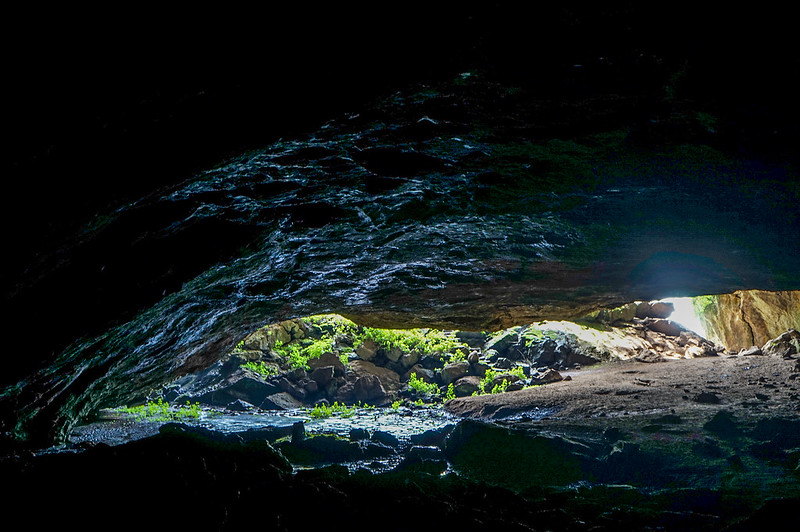
Inside Kitum Cave. Image credit: Nina R
The majority of caves are formed by water erosion and are too moist for viruses to flourish. But since Kitum Cave was created over thousands of years by the constant scratching of rocks by elephants in search of salt, its dry environment provides an optimal setting for virus survival.
Secondly, Kitum Cave is frequented by numerous animals, both large and small, including monkeys, leopards, rats, and shrews, besides the ones mentioned above. The high level of interspecies interaction within the confined space of the cave creates an ideal environment for viruses to cross the species barrier.
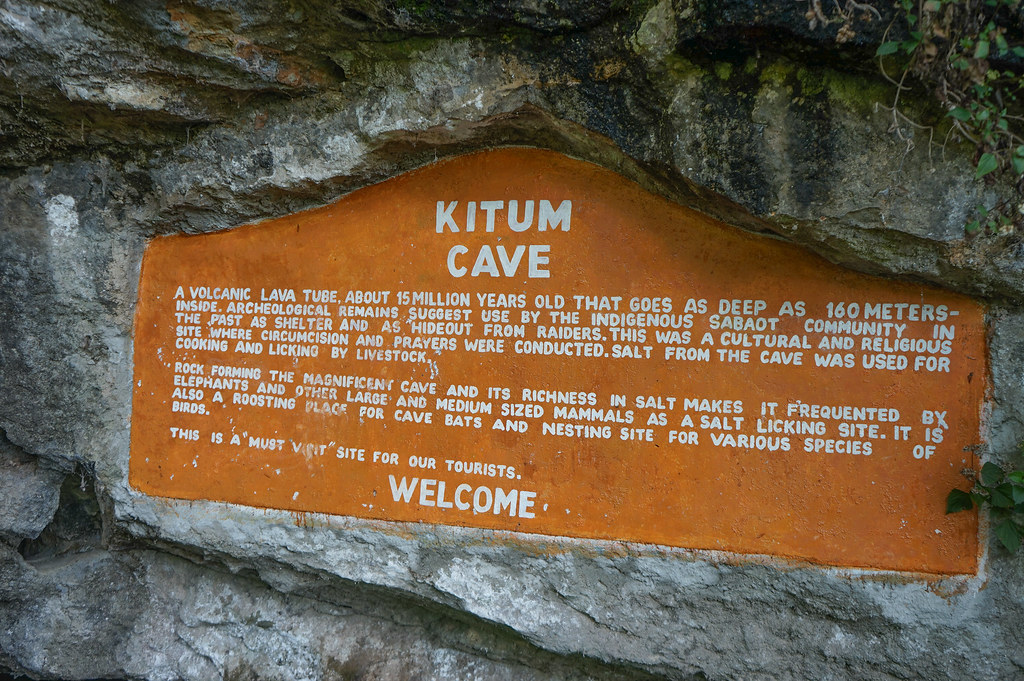
A must-visit site for tourists? Well, maybe if they wear some protective gear. Apparently, the local authorities are not too concerned about viruses. Image credit: Nina R
The outbreaks at Kitum Cave underscore the importance of understanding the ecology of viral diseases and the need for effective prevention and control measures. Some of these measures would include not entering the cave without protective gear. Nonetheless, many reckless visitors do. One of them reported being sick with an unknown disease for 6 months after visiting the cave without wearing even a single protective mask.