The Greenland shark is currently the longest-living vertebrate known on Earth, according to scientists.
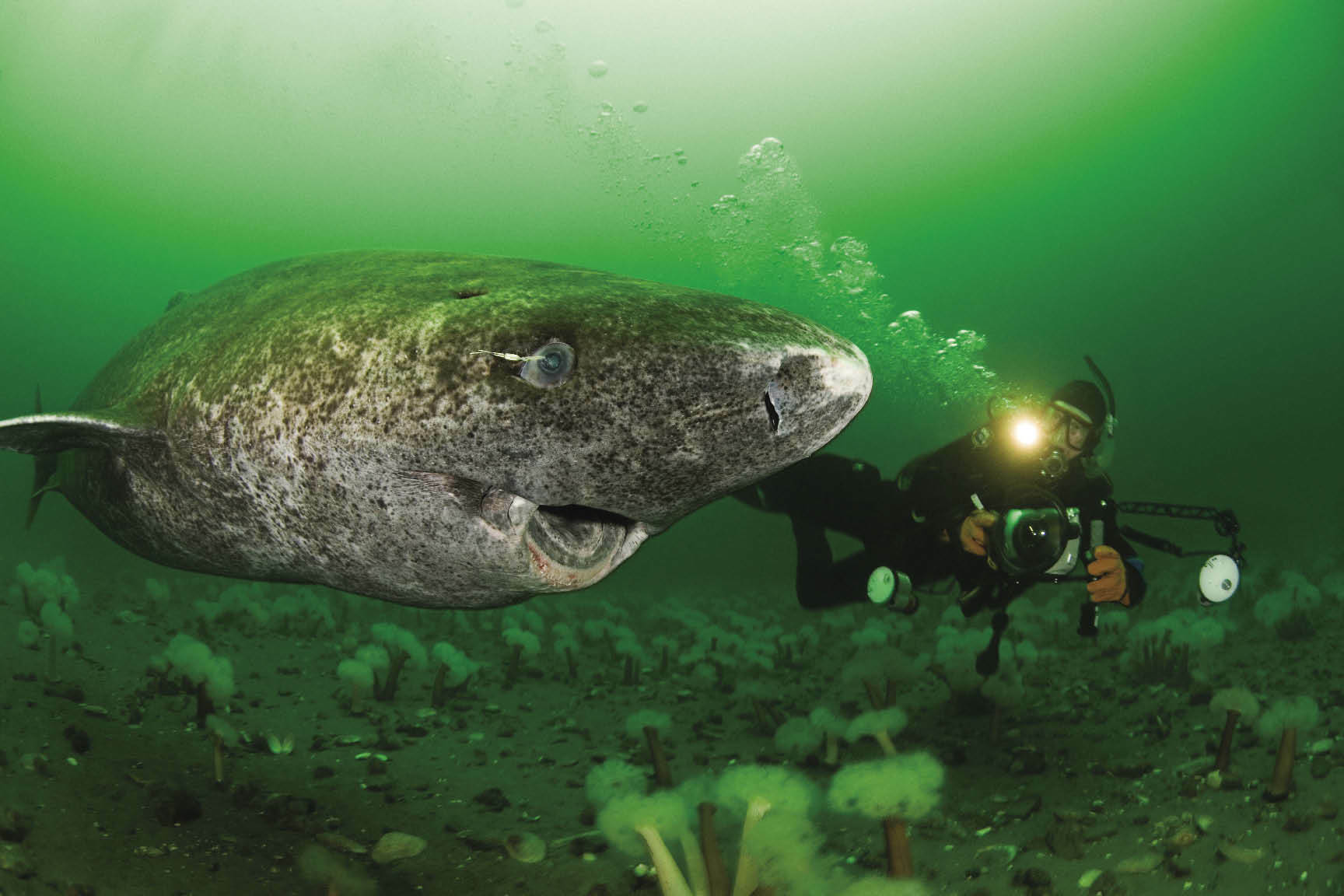
Image credit: Dive Magazine
The ages of 28 Greenland sharks were determined using radiocarbon dating of eye proteins, revealing that one female shark was estimated to be about 400 years old. This makes it the longest-living vertebrate known on Earth, surpassing the previous record holder, a bowhead whale estimated to be 211 years old.
As Julius Nielsen, a marine biologist from the University of Copenhagen who was the lead author of the study, put it: “We had our expectations that we were dealing with an unusual animal, but I think everyone doing this research was very surprised to learn the sharks were as old as they were.”
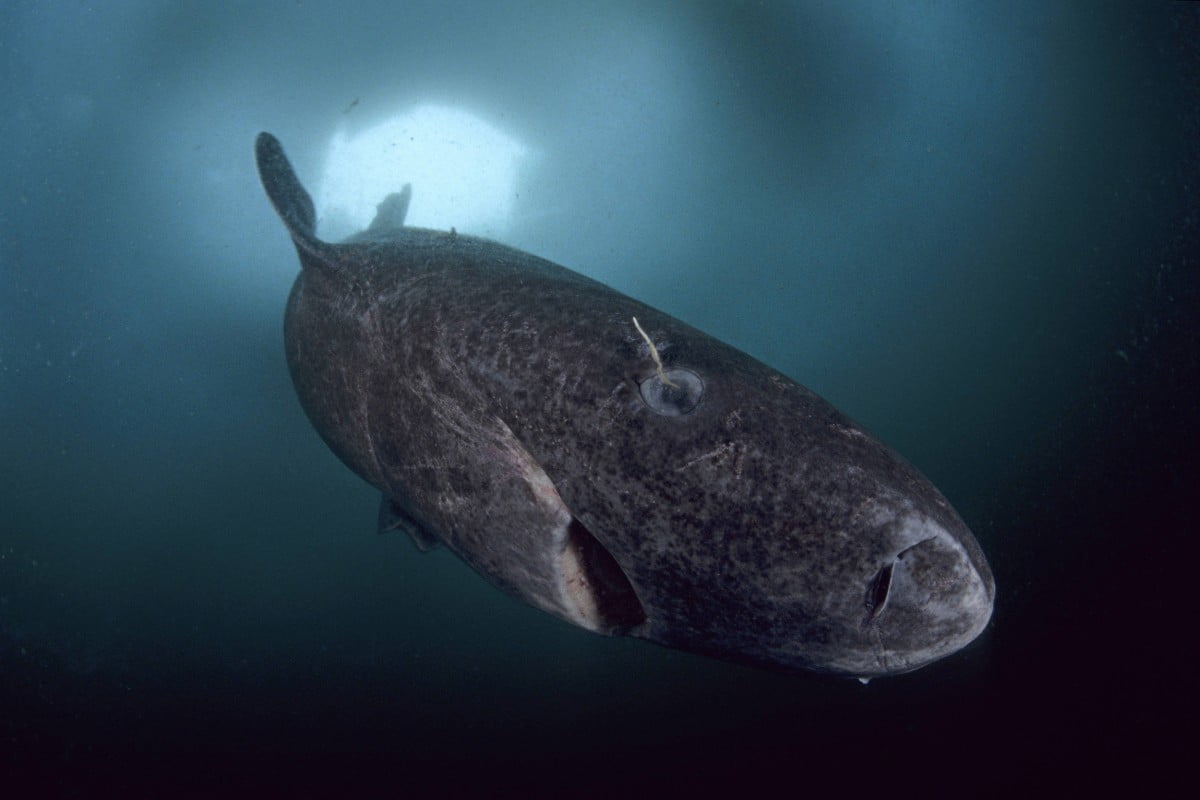
Greenland sharks swim through the cold waters of the Arctic and the North Atlantic at such a sluggish pace that has earned them the nickname “sleeper sharks.” Image credit: Julius Nielsen
Greenland sharks are massive creatures, capable of reaching up to 5m in length, but they grow at a slow rate of only 1cm per year. They can be found, swimming slowly, in the cold depths of the North Atlantic.
According to the research team, these animals only reach sexual maturity when they reach 4m in length, which, based on their estimated age range of up to 400 years, would not occur until they are approximately 150 years old.
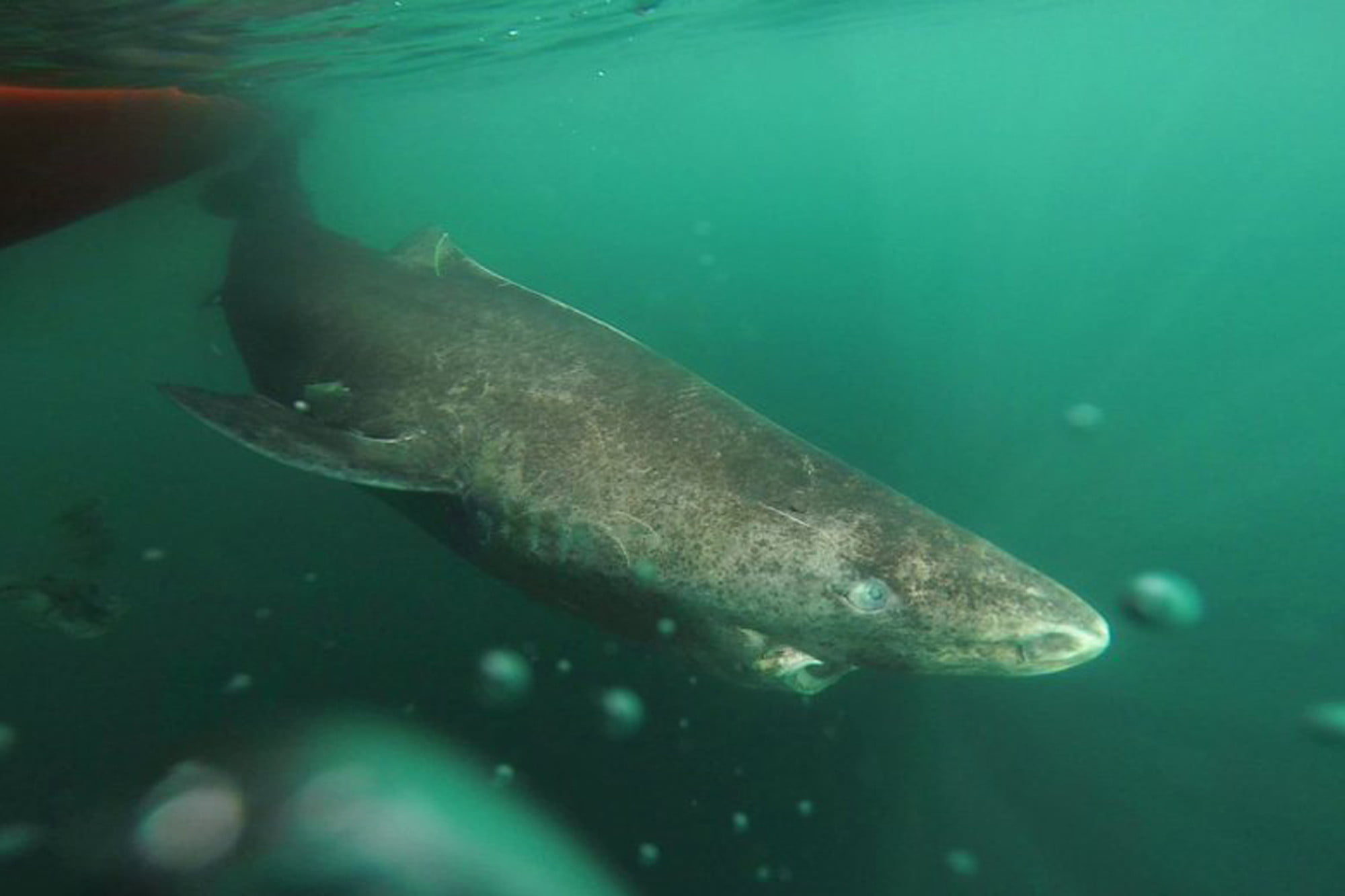
A newly tagged Greenland shark returns to the deep and cold waters of the Uummannaq Fjord in western Greenland. Image credit: Julius Nielsen
The study partly relied on radiocarbon levels in the eye tissue of the sharks, which was made possible by the large amounts of radiocarbon released into the ocean during atmospheric thermonuclear weapons tests in the 1960s. Sharks with higher radiocarbon levels in their eye tissue were determined to be less than 50 years old, while those with lower levels were estimated to be at least 50 years or older.
The researchers then drew up an estimated an age range for the older sharks based on their size, and on prior data about Greenland sharks’ size at birth and growth rates in fish.
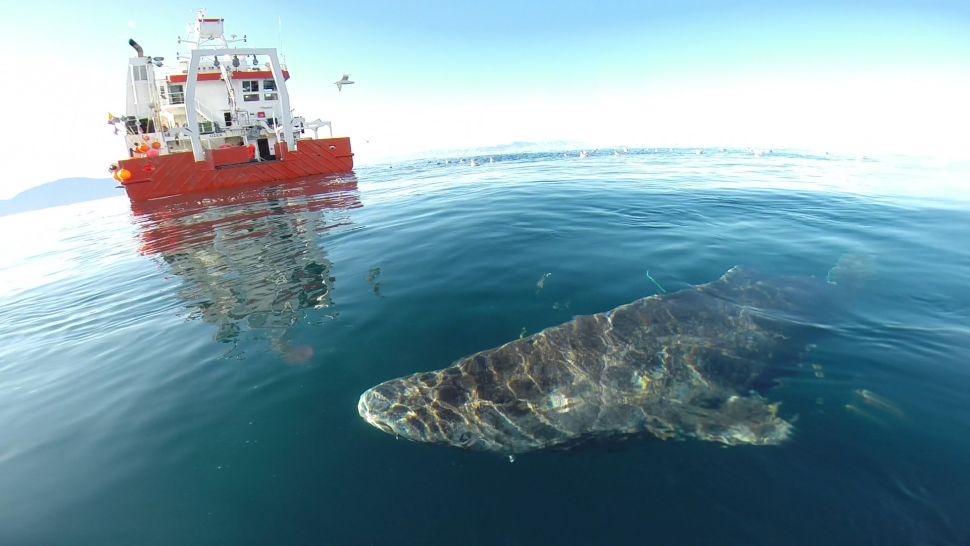
A Greenland shark swimming near the ocean surface after its release from research vessel Sanna in northern Greenland. Image credit: Julius Nielsen
According to Nielsen, the analysis has a probability rate of around 95 percent and the sharks were determined to be at least 272 years old, but could be as much as 512 years old (!), with the most likely age being 390 years.
But why do Greenland sharks live so long?
The long lifespan of these animals is attributed to their extremely slow metabolism and the cold waters they inhabit. They move through the Arctic and North Atlantic waters at a very slow pace, earning them the nickname “sleeper sharks.” Despite having been found with seal parts in their stomachs, the sharks are so sluggish that experts believe they must have consumed the seals when they were either asleep or already dead.
The slower you go, the farther you will get.