For the first time ever, we are able to observe the formation of an “ice finger of death” through some breathtaking footage.
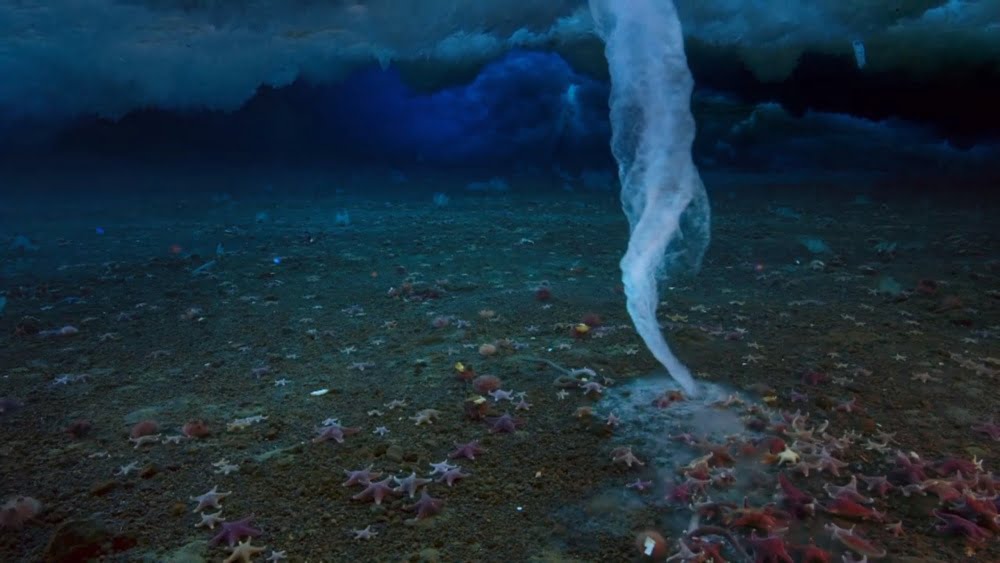
These days it’s rare to uncover a phenomenon completely new to science, one that expands our knowledge of the world in unique and wondrous ways. But just as it happened in the past few years with uncontacted tribes, unseen caves, and sea beasts, the forming of Antarctic brinicles – also known as “ice fingers of death” – was recently introduced to armchair adventurers in the form of some breathtaking footage.
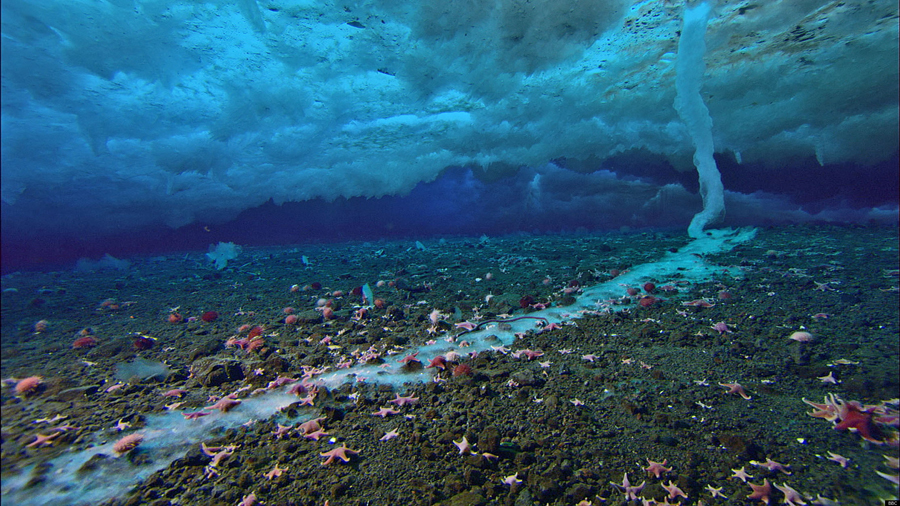
Brinicles are otherworldly, finger-like structures that reach down from the floating sea ice into frigid Antarctic waters. While scientists have been aware of their existence since the 1960s, they are rarely observed in real-time. Ice fingers only occur in specific conditions in Earth’s polar regions, under blocks of floating sea ice, making them not only difficult to track but almost impossible to capture on camera. This is what makes the below footage from BBC’s Frozen Planet series (Season 1, Series 5) so special.
Unlike frozen freshwater, ice on the ocean surface is composed of two components. During the freezing process, the water excludes most of the salt, leaving the ice crystal itself relatively pure. However, this leads to the presence of excess salt. As it needs much lower temperatures to freeze, the remaining salty water stays in its liquid form, creating highly saline brine channels within the porous ice block.
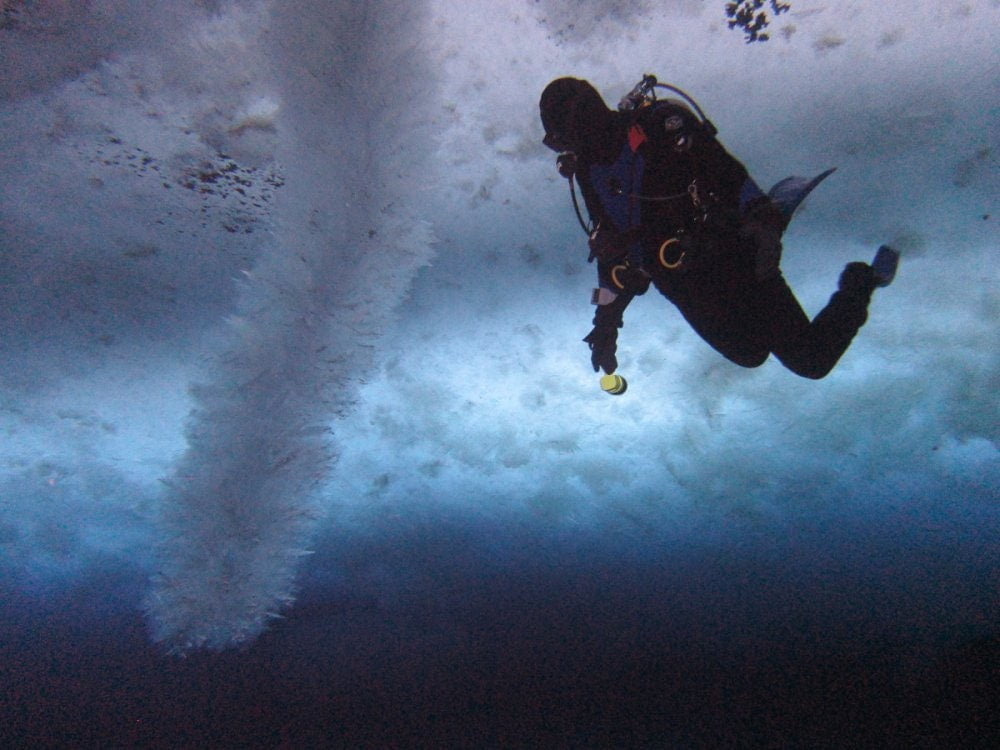
A diver examines a large brinicle. (Image Credit: Andrew Thurber, Oregon State University)
A brinicle is formed when the floating sea ice cracks and leaks out the saline water solution into the open ocean below. Since the brine is heavier than the water around it, it sinks down towards the ocean floor while freezing the relatively fresh water it comes into contact with. This process lets the brinicle grow downward, creating that finger-like resemblance.
Dr. Andrew Thurber, one of the few scientists who has seen brinicle growth firsthand, describes a fantastical scene punctuated by downward creeping brinicles. “They look like upside-down cacti that are blown from glass,” he says, “like something from Dr. Suess’s imagination. They’re incredibly delicate and can break with on the slightest touch.”
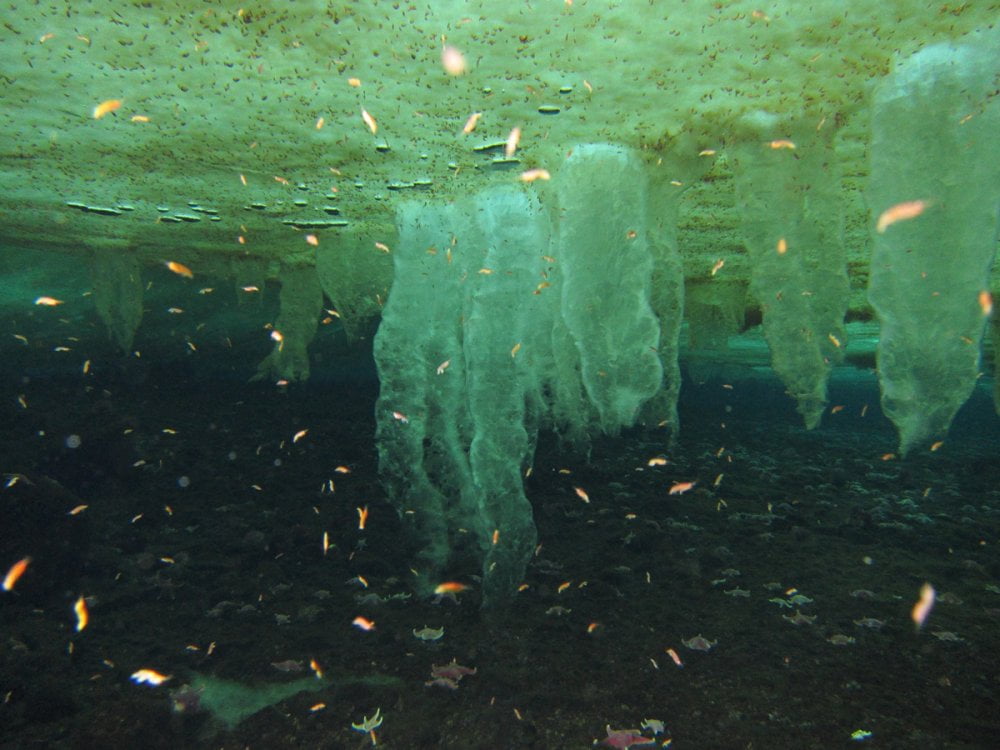
At Little Razor Back Island, Antarctica, this 3m deep area is home to thousands of brinicles that often extend to the seafloor. Living amongst them are thousands of amphipods that can be seen swimming in this image. While normally only close to the ice, when disturbed the amphipods swarm, much like a nest of bees. (Image Credit: Andrew Thurber, Oregon State University)
For nearby sea creatures, however, the fragile ice sheaths hide a deadly weapon: as shown in the video, a brinicle can reach the seafloor and as it grows from this point, it could potentially catch various creatures living at the bottom, such as sea urchins and starfish, freezing them too.
“In areas that used to have the brinicles or underneath very active ones, small pools of brine form that we refer to as black pools of death,” Thurber notes. “They can be quite clear but have the skeletons of many marine animals that have haphazardly wandered into them.”
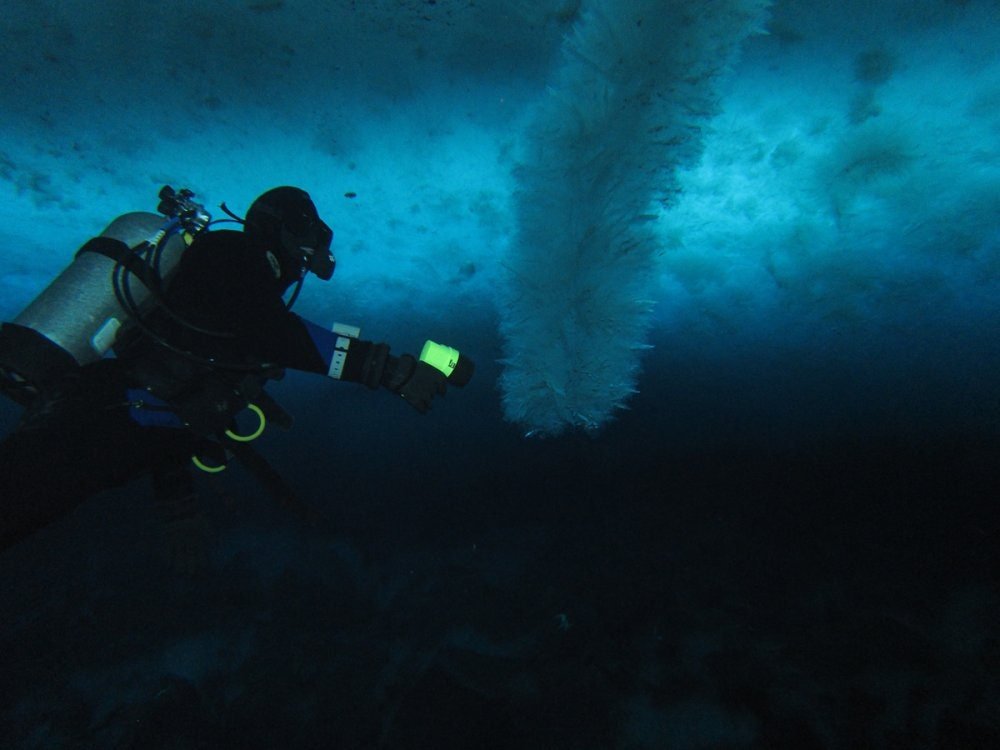
Diver Rory Welsh swimming by a 2m long Brinicle in McMurdo Sound, Antarctica. (Image Credit: Andrew Thurber, Oregon State University)
The scientific study of brinicles is in its early stages, but for the first time ever, we have video evidence of the development of these mysterious icy fingers of death.