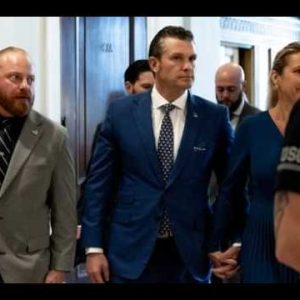
The U.S. Attorney’s Office for Washington, D.C. is now being led by someone Americans know very well: Jeanine Pirro.
And since taking the job, it has not exactly been a smooth ride.
Pirro, a longtime television personality known for her fiery rhetoric, is now running one of the most powerful prosecutorial offices in the country. But early results have raised serious questions about both judgment and competence.
Back in August, her office failed to convince a grand jury to indict a man who allegedly threw a Subway sandwich at federal officers. Prosecutors attempted to pursue a federal felony charge — and failed. They then tried to secure a conviction on a single misdemeanor count.
They failed again.
In another case involving alleged assault on a federal agent, Pirro’s office reportedly tried three separate times to secure an indictment from a grand jury.
Three times. No indictment.
But what may be her most consequential failure came this week.
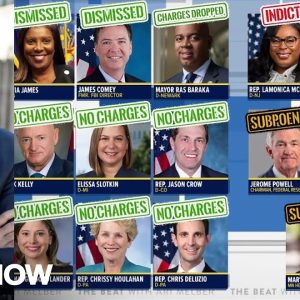
A D.C. grand jury refused to indict six Democratic lawmakers over a short video they posted last year. The video simply reminded service members of their duty to reject unlawful orders — a basic principle of military law that has existed for generations.
That’s it.
No incitement. No threats. No classified leaks.
Just a reminder of the law.

One of those lawmakers, Pennsylvania Congressman Chris Deluzio, joined the program to discuss what happened.
When asked whether Pirro might try again — since prosecutors can return to grand juries after a failed attempt — Deluzio was cautious.
“I have no idea what these folks will do,” he said. “But they’ve been crystal clear in their willingness to flout the law and abuse power.”
He argued that the Justice Department should belong to the American people — not serve as what he called “Donald Trump’s personal vendetta machine.”
The bigger issue, he suggested, isn’t just about him or his colleagues. It’s about using criminal law to intimidate political opponents.
One particularly striking element of the controversy is that the statements made in the lawmakers’ video mirror comments previously made by figures within the administration itself.
Pete Hegseth, for example, has publicly discussed the duty to disobey clearly unlawful orders — even those issued by a commander-in-chief.
Pam Bondi herself referenced similar legal principles before becoming Attorney General.
And as Deluzio pointed out, this is foundational military training. From boot camp to officer candidate school to the Naval Academy, service members are taught that they must follow lawful orders — and reject unlawful ones. Failure to do so can result in court-martial, discharge, or imprisonment.
This is not controversial doctrine.
It is the law.
Congressman Jason Crow, another lawmaker targeted in the attempted indictment, has reportedly instructed his legal counsel to demand preservation of all Justice Department documents related to the case.
Deluzio indicated he supports that approach and suggested additional steps may be forthcoming.
“I’ll keep my cards close,” he said, “but they should absolutely be preserving all documents and communications related to this unlawful use of criminal justice.”
He also noted that bipartisan concern has emerged — with some Republican senators criticizing the attempted prosecution as misguided.
Even former President Trump appeared to soften his tone after initially suggesting charges were appropriate.
Deluzio described that shift as a “walk back,” adding that there is never a bad time to do the right thing.
Still, he emphasized the broader stakes.
“When they come after me or others, yes, maybe it’s about us,” he said. “But it’s also about sending a message to the American people that dissent should be feared.”
And that, he argued, is the real danger.
The failed indictment may represent a setback for Pirro’s office. But the larger debate — about politicization of the Justice Department and the limits of executive power — is far from over.