Beneath the Jurassic clay of England’s East Midlands, the well-preserved remains of a real-life sea dragon have recently been discovered. It isn’t a mythical beast though, but the fossilized remains of an ichthyosaur – the largest and most complete ever discovered in Britain.
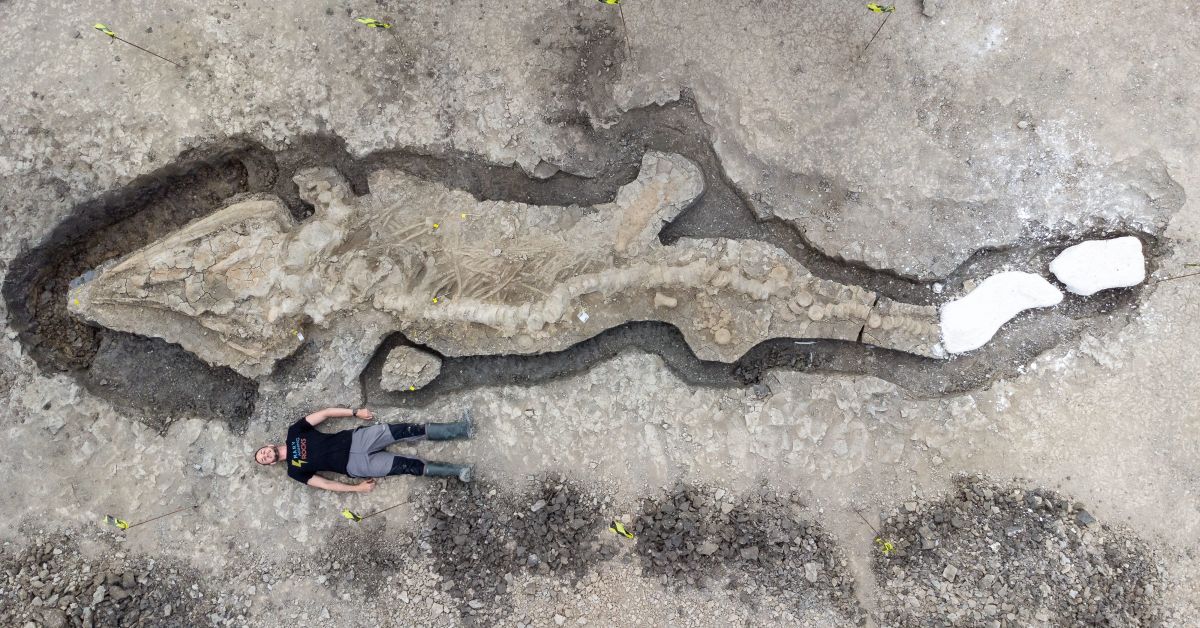
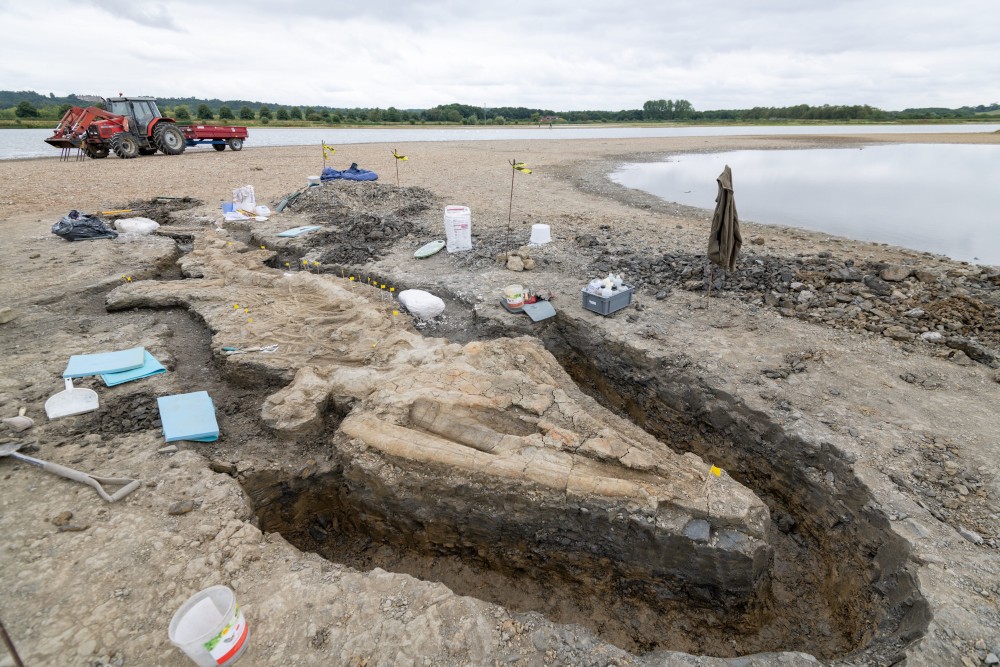
The 33ft (10m) long ichthyosaur fossil, which is about 180 million years old, was found by Joe Davis, Conservation Team Leader at Leicestershire and Rutland Wildlife Trust, during the routine draining of a lagoon island at Rutland Water Nature Reserve in February 2021. The fragile remains were excavated a team of paleontologists and the results have just been made public.
The fossil is thought to be the largest and most complete example of an ichthyosaur fossil ever discovered in Britain. When lifted for conservation and study, the block containing the 6ft (2m) skull and surrounding clay, alone weighed a tonne.
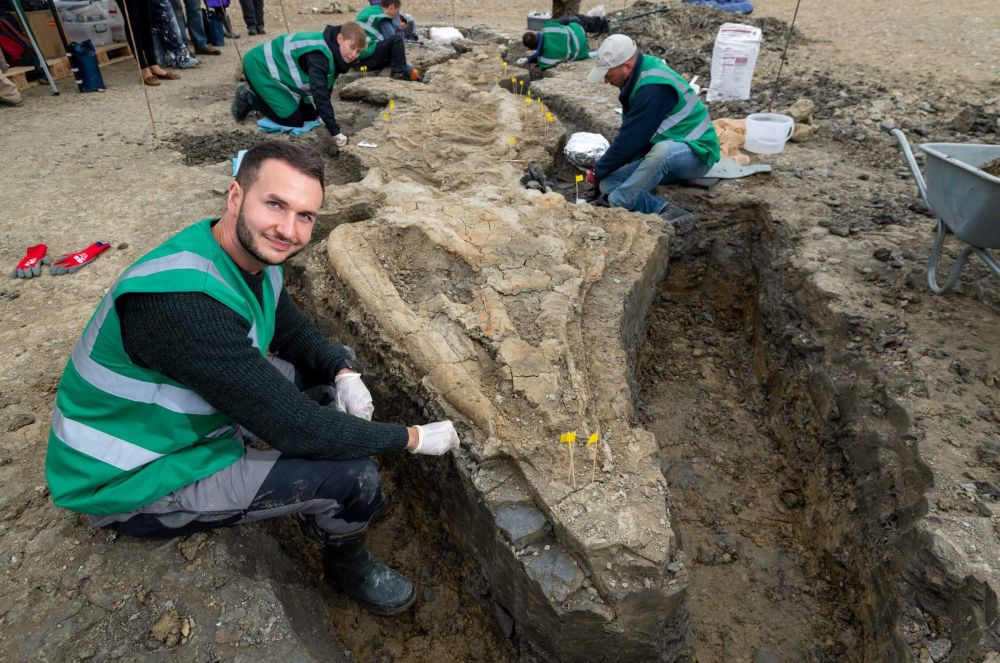
Dr Dean Lomax, a paleontologist and world-leading ichthyosaur expert who led the Rutland Sea Dragon dig, said in a statement:
“It was an honour to lead the excavation and unearth this Jurassic giant from its ancient rocky tomb. Britain is the birthplace of ichthyosaurs – their fossils have been unearthed here for over 200 years, with the first finds to be recognized by science dating back to Mary Anning and her discoveries along the Jurassic Coast. Not only is it the largest ichthyosaur skeleton ever found in Britain, but it is also the most complete skeleton of a large prehistoric reptile ever discovered in the UK. And yes, that includes dinosaurs!“
“It is a truly unprecedented discovery and one of the greatest finds in British palaeontological history,” Lomax added. “To put this find into context for the public, in the world of British paleontology, the discovery is like finding a complete Tyrannosaurus rex out in the Badlands of America, only this Jurassic giant was found in a nature reserve in Rutland, of all places!”
Excavating and collecting the fossil was a painstaking job that took a huge amount of expertise and more than 14 days of fieldwork. Before that, the research team had to meticulously document the fossil using thousands of photographs and a technique called photogrammetry, with which a 3D model of the specimen was created.
Discovered by English paleontologist Mary Anning in the early 19th century, ichthyosaurs roamed the Earth’s oceans from around 250 million years ago to 90 million years ago before falling into extinction. Jurassic clay samples taken from the newly discovered fossil suggest the animal lived around 181.5 to 182 million years ago.
Although certain species of ichthyosaur lived in the Triassic, Jurassic, and parts of the Cretaceous period, this group of extinct marine reptiles cannot be called dinosaurs – so do not annoy paleontologists that way. They are a separate band of animals that is believed to have evolved from land reptiles that eventually returned to the sea. The fact that they resemble dolphins and whales is but an example of convergent evolution, whereby similar features evolve among distantly related species to adapt to similar challenges.
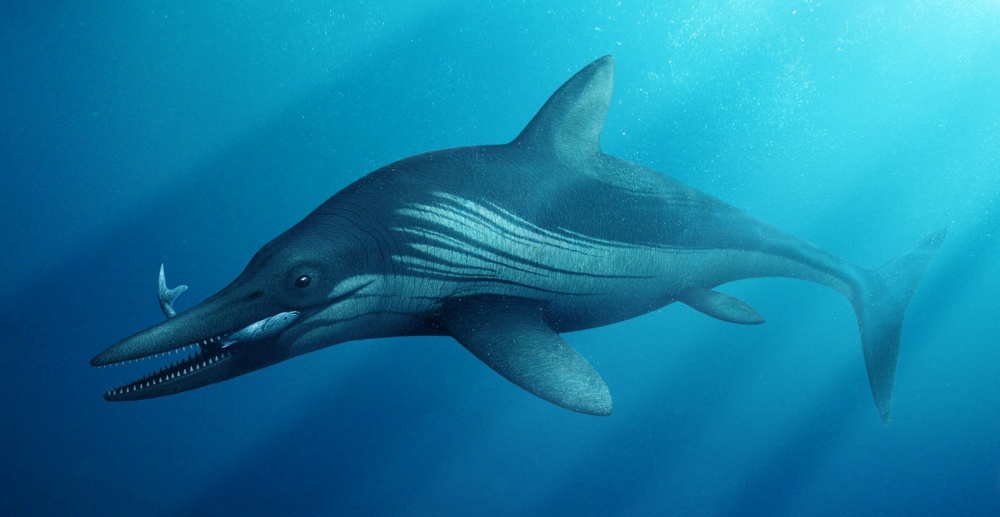
Speaking about the new discovery, marine reptile specialist Dr Mark Evans added:
“It’s a highly significant discovery both nationally and internationally but also of huge importance to the people of Rutland and the surrounding area. If our identification of the ichthyosaur is correct, as a species called Temnodontosaurus trigonodon, this will provide new details on the geographic range of the species as it hasn’t been confirmed from the UK before.”
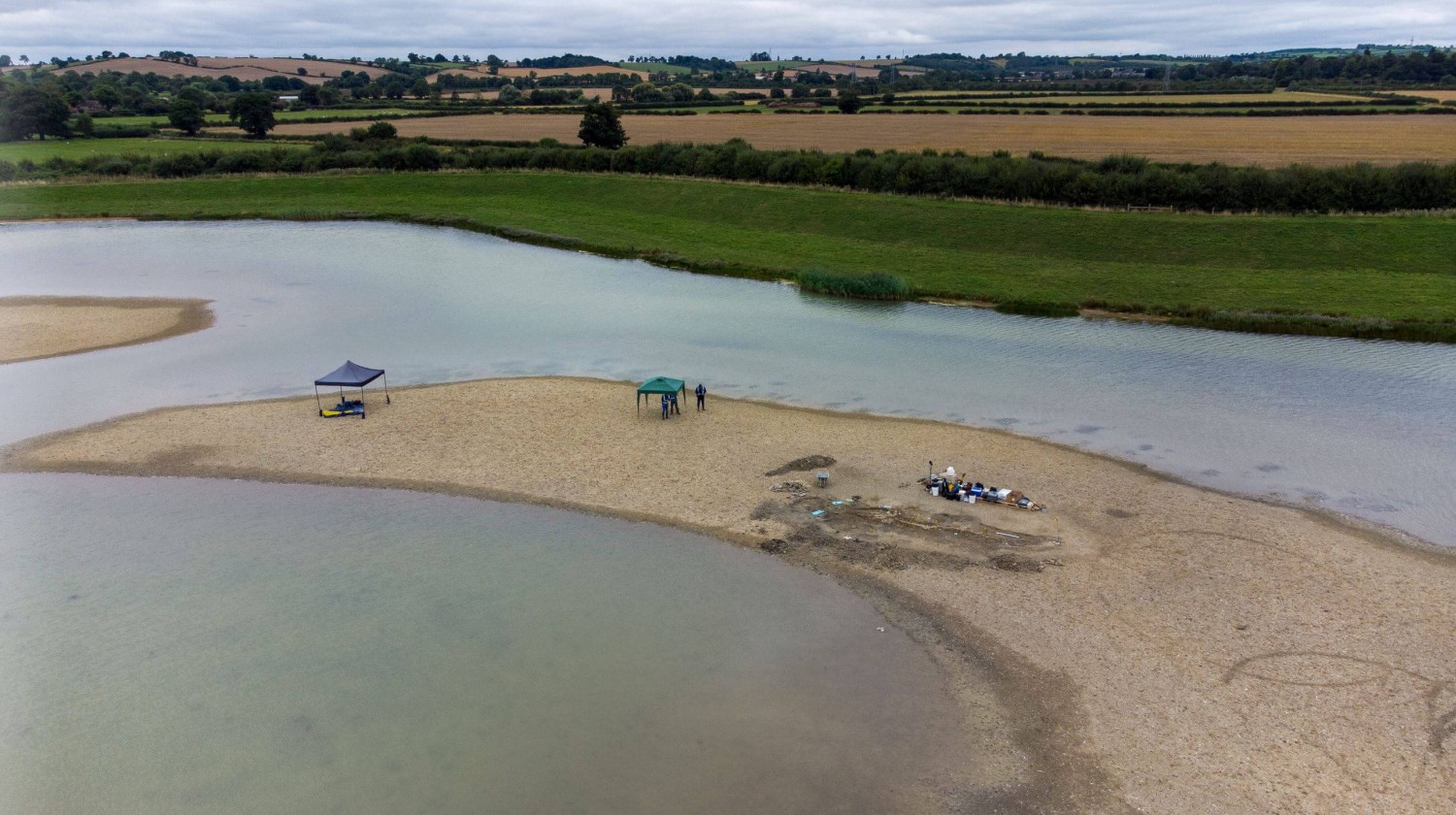
Dr Lomax and his team are carrying on with the research and hope to publish academic papers on the incredible find in the near future.